
Beginner Footwork Drills to Improve Speed & Balance

6
Tennis footwork drills for beginners on an outdoor court
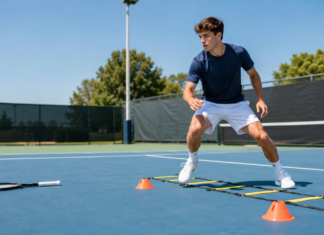
A beginner player practicing tennis footwork drills with cones and an agility ladder.

Good movement is one of the biggest differences between a beginner and a confident tennis player. You do not need perfect strokes to start improving, but you do need to get into position early, stay balanced, and recover quickly after every shot. That is why tennis footwork drills are so important for new players.

Many beginners focus only on hitting forehands and backhands, but poor movement often ruins the shot before the swing even begins. If your feet are late, your balance breaks down. If your balance breaks down, your timing suffers. And when your timing suffers, even simple balls become hard to control. The right tennis footwork drills help fix that.

In this guide, you will learn easy, practical drills that improve speed, coordination, recovery, and court awareness. These drills are beginner-friendly, require little equipment, and can be practiced on court or even at home.

Why Footwork Matters So Much in Tennis

Tennis is not just about the racket. It is a movement sport. Every shot starts with your feet. Before you can hit with control, you need to arrive in the right position. Before you can recover for the next ball, you need to push off efficiently and stay balanced.

This is why tennis footwork drills should be part of every beginner’s training routine. Better footwork helps you:

  • reach more balls comfortably
  • stay balanced during shots
  • recover faster after hitting
  • improve timing and consistency
  • feel less rushed during rallies

If you are still learning movement basics, read our guide on footwork for tennis beginners: basics for balance and speed before starting these drills. It explains the core movement patterns that make tennis footwork drills more effective. For broader beginner guidance and player development information, the USTA also provides useful tennis resources.

Common Footwork Problems Beginners Face

Before jumping into practice, it helps to know what usually goes wrong. Most new players struggle with a few simple habits:

  • standing flat-footed between shots
  • crossing their feet at the wrong time
  • taking big, slow steps instead of small adjustment steps
  • failing to recover to a ready position
  • swinging while off balance

If these sound familiar, do not worry. That is normal. The good news is that regular tennis footwork drills can correct these issues surprisingly fast when practiced consistently. For official beginner-friendly learning resources and player development information, you can also explore ITF beginner tennis resources.

1. Split-Step Reaction Drill

The split step is one of the first movement skills every player should learn. It is a small hop that prepares your body to react in any direction.

How to do it

Stand in a ready position facing the net. Imagine your opponent is about to hit. Perform a small split step by hopping lightly and landing on the balls of your feet. As soon as you land, move left or right.

Why it works

This is one of the most useful tennis footwork drills because it trains quick reactions and helps you avoid being stuck flat-footed.

Beginner tip

Keep the hop small. The goal is not height. The goal is readiness.

2. Side Shuffle Drill

Side shuffling teaches you to move laterally without losing balance. This is essential for covering balls hit wide to your forehand or backhand side.

How to do it

Set two markers about 8 to 10 feet apart. Start in the middle, lower your stance slightly, and shuffle sideways to one marker. Touch it, then shuffle back to the other side.

Why it works

This drill builds coordination, leg strength, and control. It is one of the simplest tennis footwork drills for learning to move without crossing your legs too early.

Beginner tip

Stay low and keep your chest up. Avoid bouncing too high while moving.

3. Cone Recovery Drill

A lot of beginners can move to the ball, but they forget to recover after the shot. Recovery is what prepares you for the next one.

How to do it

Place one cone in the center and one cone to each side. Start at the center, move quickly to the right cone as if hitting a shot, then recover to the center. Repeat on the left side.

Why it works

This drill teaches one of the most important patterns in tennis: move, hit, recover. Great tennis footwork drills do not only train movement to the ball. They also train movement after the shot.

Beginner tip

Do not jog back casually. Push off the outside leg and return with purpose.

4. Small Adjustment Steps Drill

Beginners often arrive near the ball but take one big final step that throws off balance. Adjustment steps solve that problem.

How to do it

Have a partner feed easy balls, or shadow the movement without a ball. Move toward the hitting zone, then take several short, quick steps before stopping in position.

Why it works

Among all tennis footwork drills, this one directly improves timing. Those final small steps help you judge distance better and make cleaner contact.

Beginner tip

Think “quick feet” as you get close to the ball.

5. Forward and Backward Movement Drill

Tennis is not only side to side. You also need to move forward for short balls and backward for deeper shots.

How to do it

Set one marker near the service line and another a few steps behind the baseline. Start in the middle. Move forward to the short marker, then backpedal or use crossover steps to return. Then move backward to the deep marker and recover again.

Why it works

This adds variety to your tennis footwork drills and helps you feel more comfortable adjusting to different ball depths.

Beginner tip

When moving backward, stay balanced and avoid leaning too far back.

6. Shadow Swing Footwork Drill

This drill combines movement with stroke preparation, which makes it very match-friendly.

How to do it

Without a ball, start in ready position. Move to an imaginary forehand, set your feet, shadow swing, then recover. Repeat on the backhand side.

Why it works

Many beginners do tennis footwork drills separately from stroke practice. This drill blends the two so your body learns movement patterns that actually transfer into real play.

Beginner tip

Do not rush. Focus on good movement first, then smooth shadow swings.

7. Ladder Quick-Feet Drill

If you have an agility ladder, it can be a fun way to sharpen your feet. If not, draw ladder boxes with chalk or imagine them.

How to do it

Move through the ladder using quick one-step or two-step patterns. Keep your knees bent and stay light on your feet.

Why it works

This is one of the best tennis footwork drills for improving rhythm, coordination, and fast feet. It is especially useful as part of a warm-up.

Beginner tip

Quality matters more than speed. Start controlled, then increase tempo.

8. Figure-Eight Movement Drill

This drill improves balance and body control while changing direction.

How to do it

Place two cones several feet apart. Move around them in a figure-eight pattern using small quick steps. Change direction after 20 to 30 seconds.

Why it works

Effective tennis footwork drills should teach your body to stay stable during direction changes. This drill does that well.

Beginner tip

Keep your steps short and your center of gravity steady.

Sample Beginner Footwork Routine

You do not need to do every drill in one session. Start with a simple plan like this:

  • Split-step reaction drill – 2 minutes
  • Side shuffle drill – 3 rounds
  • Cone recovery drill – 3 rounds each side
  • Adjustment steps drill – 3 minutes
  • Shadow swing footwork drill – 5 minutes

This short session gives you a practical introduction to tennis footwork drills without making training too complicated.

How Often Should Beginners Practice Footwork?

For most players, two to four sessions per week is enough. You do not need long workouts. Even 10 to 15 minutes of focused movement practice can make a real difference over time.

The key is consistency. Tennis footwork drills work best when they become part of your regular training, not something you do once in a while. A beginner who trains movement every week will usually improve faster than someone who only practices strokes.

Mistakes to Avoid During Footwork Training

Even the best tennis footwork drills can lose value if you practice them carelessly. Watch out for these common mistakes:

  • standing too upright
  • doing drills too fast with poor form
  • forgetting recovery steps
  • taking long, heavy steps
  • skipping the split step
  • practicing only side-to-side movement

If you notice these problems often, check our guide on top footwork mistakes beginners make and how to fix them. It pairs perfectly with these tennis footwork drills and helps you understand what to correct.

Build Better Movement One Drill at a Time

You do not need fancy training methods to move better on a tennis court. What you need is repetition, awareness, and the right fundamentals. These tennis footwork drills help you build speed, balance, and confidence in a way that fits beginner players.

As your movement improves, your shots will feel more natural too. You will arrive earlier, recover faster, and stay calmer during rallies. That is why footwork should never be treated as an extra. It is a core part of learning tennis well.

To continue improving your movement and athletic foundation, also read best footwork exercises for tennis to improve speed and agility. It is the natural next step after these beginner tennis footwork drills and follows the internal linking plan for this cluster.

LEAVE A REPLY

Please enter your comment!
Please enter your name here