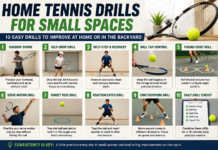

If you want to improve your game without always needing a partner, wall tennis practice is one of the best ways to train. For beginners, it offers a simple, low-cost, and highly effective way to build control, rhythm, timing, and consistency. A practice wall gives you instant feedback on every shot, which makes learning faster and helps you repeat good habits again and again.
Many new players think they can only improve by rallying with another person, but that is not true. Wall tennis practice lets you train alone, stay active, and work on the most important parts of your game in a very practical way. It can help you sharpen your forehand, backhand, footwork, reaction speed, and ball control, even if you only have 15 to 20 minutes available.
If you are building a full beginner routine, start with our 15 Best Tennis Drills for Beginners and then combine it with this guide for more solo training ideas. You can also read 10 Solo Tennis Drills to Improve Without a Partner if you want more ways to train on your own. These guides work perfectly with wall tennis practice because they help you turn solo repetition into real improvement.
Why Wall Training Is So Good for Beginners
The biggest advantage of wall tennis practice is repetition. When you hit against a wall, the ball comes back quickly, so you get far more touches in a short time than you would in many casual rallies. That extra repetition helps beginners improve faster because every swing becomes a chance to learn.
Another major benefit is convenience. You do not need to schedule with another player, pay for lessons every day, or depend on court availability as often. With wall tennis practice, you can train when it fits your schedule. Even a short session can make a difference if you stay focused and use the right drills.
It also teaches discipline. When you train with a wall, there is nowhere to hide poor technique. If your contact is late, the rebound will feel wrong. If your swing path is too wild, the ball will fly off badly. Over time, wall tennis practice helps you understand what clean contact feels like and how to stay balanced through each shot.
What You Need Before You Start
Before starting, keep things simple. You do not need expensive gear for wall tennis practice, but you do need a safe setup.
Here is what helps:
- A flat practice wall or rebound wall
- A tennis racquet that suits your level
- A few tennis balls
- Comfortable shoes with good grip
- Enough open space to move safely
- A target area marked with chalk or tape if allowed
Beginners should focus on control before power. The point of wall tennis practice is not to smash every ball as hard as possible. It is to build timing, consistency, and confidence. Start slower, stay relaxed, and aim to keep the ball coming back in a manageable pattern.
Best Warm-Up Before You Begin
Do not skip your warm-up. Even a short warm-up can help you move better and reduce injury risk. Spend 5 minutes doing light movement before your first drill.
A simple warm-up can include:
- Light jogging in place
- Arm circles
- Shoulder rolls
- Side steps
- Gentle split-step movement
- Easy shadow swings
If you want a full pre-session routine, read Best Tennis Warm-Up Routine (5-Minute Beginner Guide). A good warm-up makes wall tennis practice much more effective because your body is ready to react and move correctly.
Drill 1: Forehand Repetition Drill
This is the most basic beginner drill and one of the most useful. Stand a comfortable distance from the wall and hit gentle forehands into the same target area. Try to keep your swing smooth and your balance steady.
Focus on:
- Watching the ball carefully
- Meeting it in front of your body
- Finishing your swing in control
- Recovering after each shot
This drill teaches rhythm and helps beginners feel comfortable with repeated contact. During wall tennis practice, your goal is not speed at first. Your goal is making 10, then 20, then 30 controlled contacts in a row.
Drill 2: Backhand Control Drill
Once your forehand feels stable, move to backhands. If you use a two-handed backhand, focus on staying compact. If you use one hand, make sure your contact point stays in front and your swing remains balanced.
Beginners often rush this shot, but wall tennis practice is perfect for slowing things down. Hit soft, controlled backhands and notice how the ball reacts. If the rebound is too low or too wild, that usually means your contact or racquet face needs adjustment.
This drill improves confidence on the backhand side and helps you get comfortable with repetition under pressure.
Drill 3: Alternating Forehand and Backhand
This is where wall tennis practice starts to feel more like real tennis. Instead of standing still and repeating one shot, alternate between forehands and backhands. Move your feet every time and recover to a ready position after each ball.
This drill develops:
- Footwork
- Balance
- Recovery habits
- Shot preparation
- Coordination between both sides
At first, go slowly. Beginners often lose control when they rush side-to-side movement. The key is learning to stay organized between shots.
Drill 4: Volley Reactions at the Wall
Volleys are great for wall training because the wall sends the ball back quickly. Stand closer than you would for groundstrokes and use compact punches instead of full swings. Keep your racquet head up and your hands steady.
This type of wall tennis practice improves reactions and teaches you how to control the ball with short movements. Start with forehand volleys only, then backhand volleys, and finally alternate both.
You do not need power here. Focus on quick hands, soft control, and balance through contact.
Drill 5: Footwork Plus Hit Drill
A lot of beginners think hitting is the only skill that matters, but footwork is just as important. In this drill, shuffle left or right before each shot. The goal is to arrive in balance, set your feet, and then hit.
This is one of the most valuable forms of wall tennis practice because it combines movement with timing. Tennis is never just about swinging. It is about getting into the right position early enough to make a clean shot.
If footwork is one of your weak points, also read Beginner Footwork Drills to Improve Speed & Balance for more focused training.
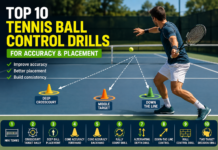
Drill 6: Target Practice for Accuracy
Pick a safe target area on the wall. It could be the middle zone, a chalk square, or a taped section. Try to hit the same area repeatedly using controlled strokes.
This improves:
- Direction
- Focus
- Shot discipline
- Ball placement
Target work makes wall tennis practice more purposeful. Instead of mindlessly hitting, you are training accuracy. That is a big difference. Beginners who learn to aim early usually improve faster than players who only focus on keeping the ball alive.
Drill 7: One-Bounce Rhythm Drill
For this drill, let the ball bounce once before every shot and try to create a comfortable rhythm. This is ideal for beginners because it gives you time to judge the rebound and prepare properly.
One of the best things about wall tennis practice is that it teaches rhythm through repetition. The ball comes back again and again, so you naturally start to understand spacing, timing, and recovery. With this drill, the goal is not power. It is flow.
Try to keep your body relaxed. Tension usually leads to poor contact and rushed swings. Beginners can also review basic training guidance from the USTA to better understand how consistent practice supports improvement.
Common Mistakes Beginners Make
Even though wall tennis practice is simple, many beginners make a few common errors:
Hitting too hard
If you hit with too much power, the rebound becomes difficult to control. Start with moderate pace.
Standing too close or too far
Experiment until you find a distance that gives you enough reaction time without making the drill too easy.
Ignoring footwork
Do not become a statue. Small adjustment steps matter on almost every shot.
Using poor technique repeatedly
Repetition is only helpful if the movement is mostly correct. Slow down and stay mindful.
Training without a goal
Each session should focus on something specific, such as forehands, backhands, volleys, or accuracy.
How Often Should Beginners Do Wall Training?
For most beginners, wall tennis practice 2 to 4 times per week works very well. Even 15 to 20 minutes per session can lead to real progress if you stay consistent. You do not need long sessions every day. It is usually better to train a little more often with good focus than to do one very long, messy workout.
A simple weekly plan could look like this:
- Day 1: Forehands and backhands
- Day 2: Footwork and target practice
- Day 3: Volleys and reaction work
- Day 4: Mixed session with all basic drills
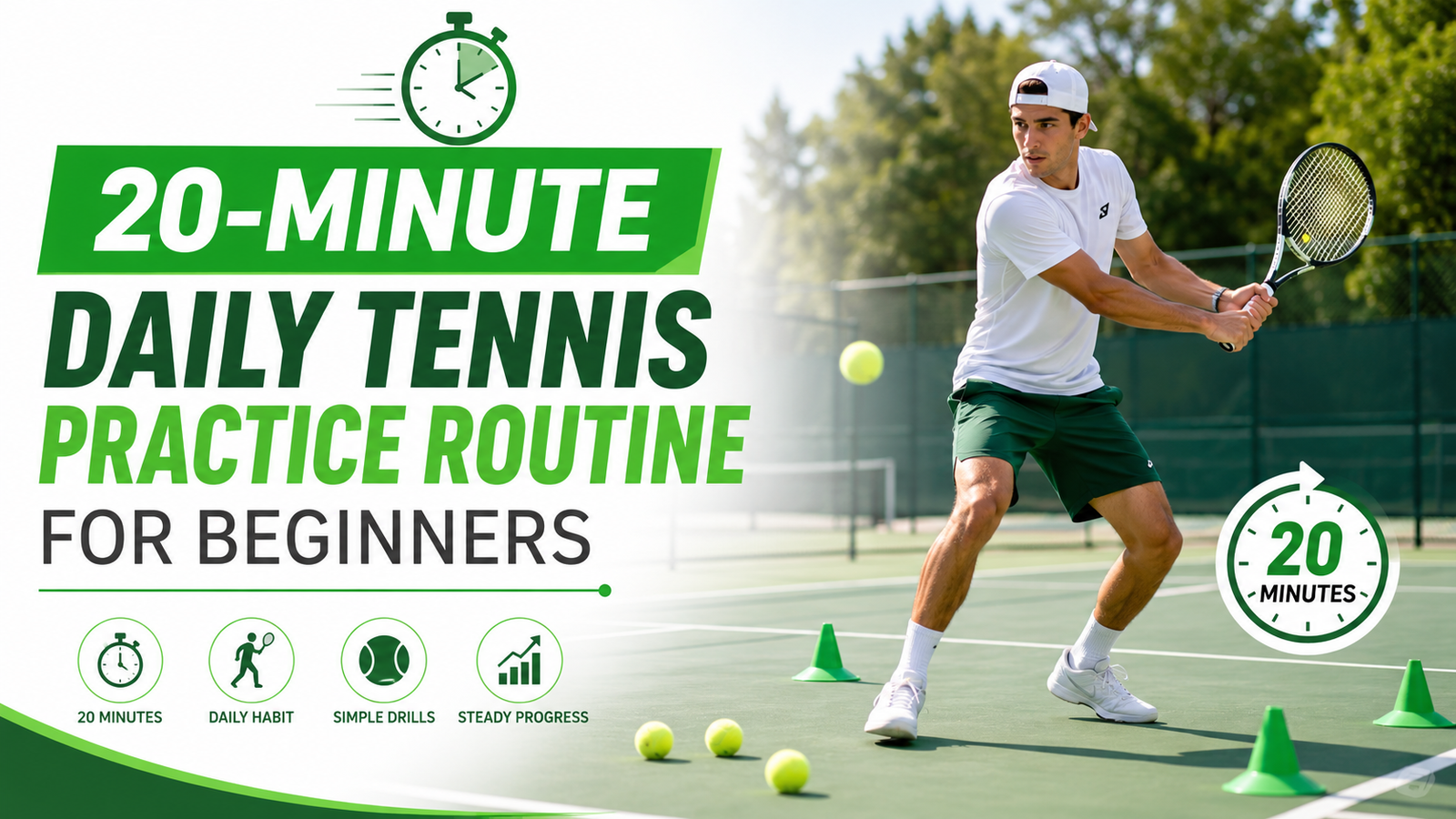
If you want help structuring your weekly routine, read 20-Minute Daily Tennis Practice Routine for Beginners. It pairs very well with wall tennis practice and helps you stay consistent.
Can Wall Training Replace Real Match Play?
No, it cannot replace everything. Real tennis includes serving, returning, reading another player, and adapting to unpredictable shots. But wall tennis practice can absolutely improve the foundation needed for those situations. It builds cleaner contact, better timing, stronger reactions, and more confidence with repetition.
Think of it this way: match play tests your skills, while wall work helps build them. Both matter. For a beginner, this kind of practice is one of the fastest ways to make progress between lessons, partner sessions, or casual games.
Best Tips to Improve Faster
To get better results from wall tennis practice, keep these tips in mind:
- Start each session with a clear goal
- Focus on control before pace
- Stay light on your feet
- Recover to ready position after each shot
- Keep sessions short but consistent
- Track how many controlled shots you can make in a row
- Mix simple drills with movement drills
You can also challenge yourself over time. For example:
- 20 forehands in a row
- 20 backhands in a row
- 10 alternating shots without losing balance
- 15 controlled volleys in a row
Those small targets keep wall tennis practice productive and help you measure progress. If you are still learning the game, the ITF is also a useful source for understanding tennis basics and official standards.
Final Thoughts
For new players, wall tennis practice is one of the smartest ways to improve at home or at a nearby court. It is simple, affordable, flexible, and highly effective when done consistently. You can work on forehands, backhands, volleys, movement, rhythm, and accuracy without needing a partner every time. That makes it one of the best tools for building strong tennis basics.
The key is to stay patient and purposeful. Do not rush for power or try to make every session look advanced. Focus on clean contact, good balance, and steady repetition. Over time, wall tennis practice will help you feel more comfortable with the ball and more confident in real play.
To keep progressing, also explore 15 Best Tennis Drills for Beginners and 10 Solo Tennis Drills to Improve Without a Partner so you can build a stronger beginner training routine around your solo sessions.