
How to Return a Serve in Tennis (Beginner Return Guide)

9
tennis return serve beginner guide on outdoor court
Tennis return serve beginner guide showing ready position and return technique.

A strong tennis return serve beginner foundation helps new players react earlier and make cleaner contact. Tennis return serve beginner technique is one of the most important skills to learn early if you want to stay in points and build confidence on the court. Many new players focus heavily on serving, but learning how to return consistently is just as important for match improvement.

The good news is that learning how to return a serve in tennis does not require advanced technique at first. Beginners usually improve fastest by focusing on simple positioning, timing, balance, and making clean contact. You do not need a powerful return right away. You need a dependable one.

In this beginner return guide, you will learn how to get ready for a serve, where to stand, how to react quickly, and what mistakes to avoid. By the end, you will have a clear foundation for building a stronger return game.

If you are still working on your own serve mechanics, it also helps to understand the basics of how to serve in tennis for beginners, because knowing what servers are trying to do makes their serves easier to read. And once you understand the return, you can improve faster with targeted serve practice drills for beginners.

Tennis Return Serve Beginner Tips for Better Timing

In every point, one player serves and the other player must respond. That response sets the tone for what happens next. A good return can:

  • neutralize the server’s advantage
  • put the ball back in play with control
  • create pressure on the opponent
  • help you start rallies more often
  • improve confidence during real matches

For beginners, the return of serve is less about hitting winners and more about making the server play one more ball. A simple, controlled return is often enough to win points at beginner level because many servers struggle on the next shot. A simple tennis return serve beginner routine can improve reaction time and shot control during practice.

The Main Goal of a Beginner Return

When learning how to return a serve in tennis, keep this goal in mind:

Get the ball back in play with balance and control.

That is your first mission. Not power. Not spin. Not difficult placement. Just a clean, stable return that lands in the court.

Once you can do that regularly, you can start working on depth, direction, and aggression. The goal of tennis return serve beginner practice is not power first, but control, balance, and consistency.

Step 1: Start With the Right Ready Position

Your ready position affects everything. If you are too stiff, too upright, or too late, the serve will rush you.

A strong beginner return position should look like this:

  • feet slightly wider than shoulder-width apart
  • knees bent
  • upper body leaning slightly forward
  • racquet held in front of the body
  • hands relaxed, not tense
  • eyes focused on the server

Try to stay light on your feet. You should feel ready to move in any direction. Good footwork is a major part of tennis return serve beginner success because it helps you reach the ball in balance. Avoid standing flat-footed.

Step 2: Stand in the Right Place

Beginners often ask where they should stand to return serve. The answer depends on the speed and type of serve, but a simple starting point works well.

For slower beginner serves

Stand a little inside or just behind the baseline. This gives you time while still allowing you to move forward if needed.

For faster serves

Stand a little farther back to give yourself extra reaction time.

For second serves

You can often step a little closer because second serves are usually slower and less aggressive.

As a beginner, do not overcomplicate this. Start from a comfortable position where you can see the ball clearly and make contact in front of your body.

Step 3: Watch the Server Carefully

A good return begins before the server hits the ball. Watch for clues during the service motion:

  • ball toss direction
  • body position
  • racquet path
  • contact point
  • whether the serve looks flat, sliced, or high and slow

At beginner level, you do not need to read every tiny detail. Just train yourself to focus fully on the server and the ball toss. That alone will improve your reaction time.

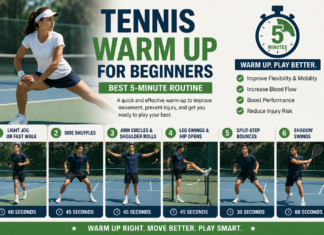
Step 4: Use a Split Step at the Right Time

One of the best habits for returners is the split step.

A split step is a small hop or bounce you make just as the server is about to hit the ball. It helps you stay balanced and react faster.

How to do it:

  1. Stay on the balls of your feet.
  2. Make a small hop as the server makes contact.
  3. Land softly with your weight centered.
  4. Push toward the ball as soon as you recognize the direction.

This movement may seem small, but it makes a big difference. Without it, you often react late or get stuck.

Step 5: Keep the Swing Short and Simple

This is one of the biggest beginner mistakes.

When the serve comes fast, many players try to take a full backswing like they are hitting a normal groundstroke. That usually causes late contact or mishits.

For returns, think:

Short backswing, clean contact, smooth follow-through.

You are using the pace of the serve rather than trying to create all the power yourself.

Good beginner return swing keys:

  • turn shoulders early
  • keep backswing compact
  • make contact in front
  • guide the ball back
  • finish under control

If you already understand stroke basics, this becomes easier. A good grip setup from your groundstroke fundamentals also helps, especially if you are still learning how to serve in tennis for beginners and the overall rhythm of point play.

Step 6: Focus on Contact Point

The ideal contact point for a return is usually out in front of your body. If the ball gets too close to you, it becomes harder to control.

Try to:

  • move your feet early
  • line up the body
  • meet the ball in front
  • stay balanced through contact

For high serves, especially beginner kick-like serves or looping second serves, let the ball drop into a comfortable strike zone if possible. Do not rush unnecessarily.

Step 7: Aim for a Safe Target

Beginners should not aim too close to the lines on the return. That adds risk without much reward.

A better strategy is to aim:

  • crosscourt
  • deep through the middle
  • with enough height over the net

Why the middle? Because it gives you more margin for error and reduces sharp angles for your opponent.

A safe return is often the smartest return.

Forehand Return vs Backhand Return

You need to be prepared for both sides.

Forehand return

Many beginners feel more confident on the forehand side. Use a short unit turn, step into the ball if possible, and guide it back with control.

Backhand return

For beginners, the backhand return often works best with a very compact motion. If you use a two-handed backhand, keep both hands steady and try not to swing too big.

The key on both sides is simplicity. The faster the serve, the shorter the swing should be.

How to Return a First Serve

First serves are usually faster and more aggressive.

Beginner first-serve return tips:

  • stand slightly farther back if needed
  • prioritize reaction and control
  • shorten the swing
  • block or guide the ball back
  • aim crosscourt or deep middle

Do not feel pressured to attack every first serve. Your job is to neutralize it.

How to Return a Second Serve

Second serves are often slower, higher, and easier to attack.

Beginner second-serve return tips:

  • step in a little more
  • be ready earlier
  • take the ball confidently
  • hit with more forward intent
  • place the ball to a comfortable target

This is often the best chance to take control of the point. Even then, keep your technique under control. A rushed aggressive return usually causes more errors than pressure.

Common Beginner Mistakes on the Return

If you want to improve faster, avoid these errors.

1. Standing too still

You need active feet and a split step.

2. Taking too big a swing

The biggest tennis return serve beginner mistake is taking too large a swing when a short controlled return works better.

3. Watching too late

Focus on the toss and the server’s contact point.

4. Trying to hit winners too early

Beginners win more by consistency than by risky returns.

5. Poor positioning

If you feel rushed every time, adjust where you stand.

6. Falling backward

Stay balanced and move through the shot whenever possible.

Simple Return Strategy for Beginners

If you are overwhelmed during real points, use this simple plan:

  • get into ready position early
  • watch the toss carefully
  • split step at contact
  • keep swing short
  • return deep to the middle or crosscourt
  • recover quickly after the shot

This basic strategy works extremely well for beginner players and helps turn the return into a strength instead of a weakness.

Best Ways to Practice the Return of Serve

Like every skill in tennis, returning improves through repetition. Some of the best beginner methods include. Many players improve faster once they treat tennis return serve beginner practice as a separate skill, not just part of general rallying:

Partner serve practice

Have a partner serve at moderate speed while you focus only on clean returns.

Coach-fed return drills

A coach can simulate serve pace and direction while helping with timing.

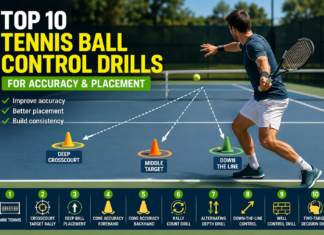
Return target practice

Place cones or targets in safe areas crosscourt and middle, then try to guide returns there.

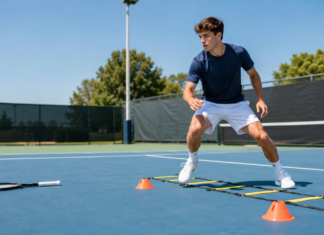
Split-step timing drills

Practice the movement without even hitting the ball at first.

Serve-and-return combinations

Alternate serving and returning to understand both sides of the point.

To build this skill faster, combine your return work with serve practice drills for beginners so you become more comfortable reading tosses, pace, and bounce patterns.

Mental Tips for Better Returns

The return can feel stressful because reaction time is short. These simple mental habits help:

  • expect the ball every time
  • stay relaxed in the hands and shoulders
  • do not panic if the serve looks fast
  • focus on one simple target
  • move on quickly after mistakes

Confidence on the return comes from preparation, not guessing.

How Long Does It Take to Improve Your Return?

Beginners often see improvement quickly because return technique becomes more efficient with just a few good habits. If you practice regularly, you may notice better timing and cleaner contact within a few sessions.

The biggest early improvements usually come from:

  • better positioning
  • earlier preparation
  • shorter swing
  • calmer shot selection

Once those are in place, your return becomes far more reliable.

Final Thoughts

Learning how to return a serve in tennis is one of the smartest things a beginner can do. A dependable return helps you survive tough service games, start more rallies, and build confidence in matches.

Do not worry about hitting perfect returns at first. Focus on the basics: ready position, split step, short swing, clean contact, and safe targets. Those fundamentals will carry you a long way.

Tennis return serve beginner improvement comes from repetition, balance, and smart positioning. If your tennis return serve beginner technique improves, you will return more balls in play and start rallies with confidence. As you improve, your return will become more natural, more controlled, and more effective under pressure. Keep it simple, practice consistently, and remember that every solid return gives you a chance to take control of the point.

LEAVE A REPLY

Please enter your comment!
Please enter your name here