
Ball control is one of the first skills every beginner should build if they want to rally longer, place shots better, and reduce unforced errors. Many new players swing too hard, rush the contact point, or focus only on power. In reality, smart control is what helps players become more consistent. That is why tennis ball control drills are so important for beginners who want steady improvement.
In this guide, you will learn the best tennis ball control drills to improve accuracy, placement, touch, and consistency. These drills are simple enough for beginners, but they also build habits that remain valuable as your level improves. If you also want to improve how you manage pace and direction, read How to Control Power & Accuracy in Tennis Shots for a deeper breakdown of clean shot control mechanics.
Why Ball Control Matters in Tennis
Before getting into the drills, it helps to understand what ball control really means. Ball control is your ability to send the ball where you want with the right height, speed, and depth. A player with good control does not just keep the ball in play. They can also guide it crosscourt, down the line, shorter, deeper, higher, or lower depending on the situation.
For beginners, ball control leads to several major benefits:
- Fewer mistakes during rallies
- Better shot placement
- More confidence under pressure
- Easier improvement in match play
- Stronger foundation for advanced skills later
The best part is that tennis ball control drills do not require advanced technique to get started. You only need focus, repetition, and a clear target.
What Causes Poor Ball Control?
Many beginners struggle with control for the same reasons. These include:
- Swinging too hard
- Watching the target too early instead of the ball
- Poor footwork before contact
- Late contact point
- Tight grip pressure
- Lack of balance during the shot
When you practice tennis ball control drills, you train your body to stay calmer and more organized during each shot. Over time, this improves timing, feel, and consistency.
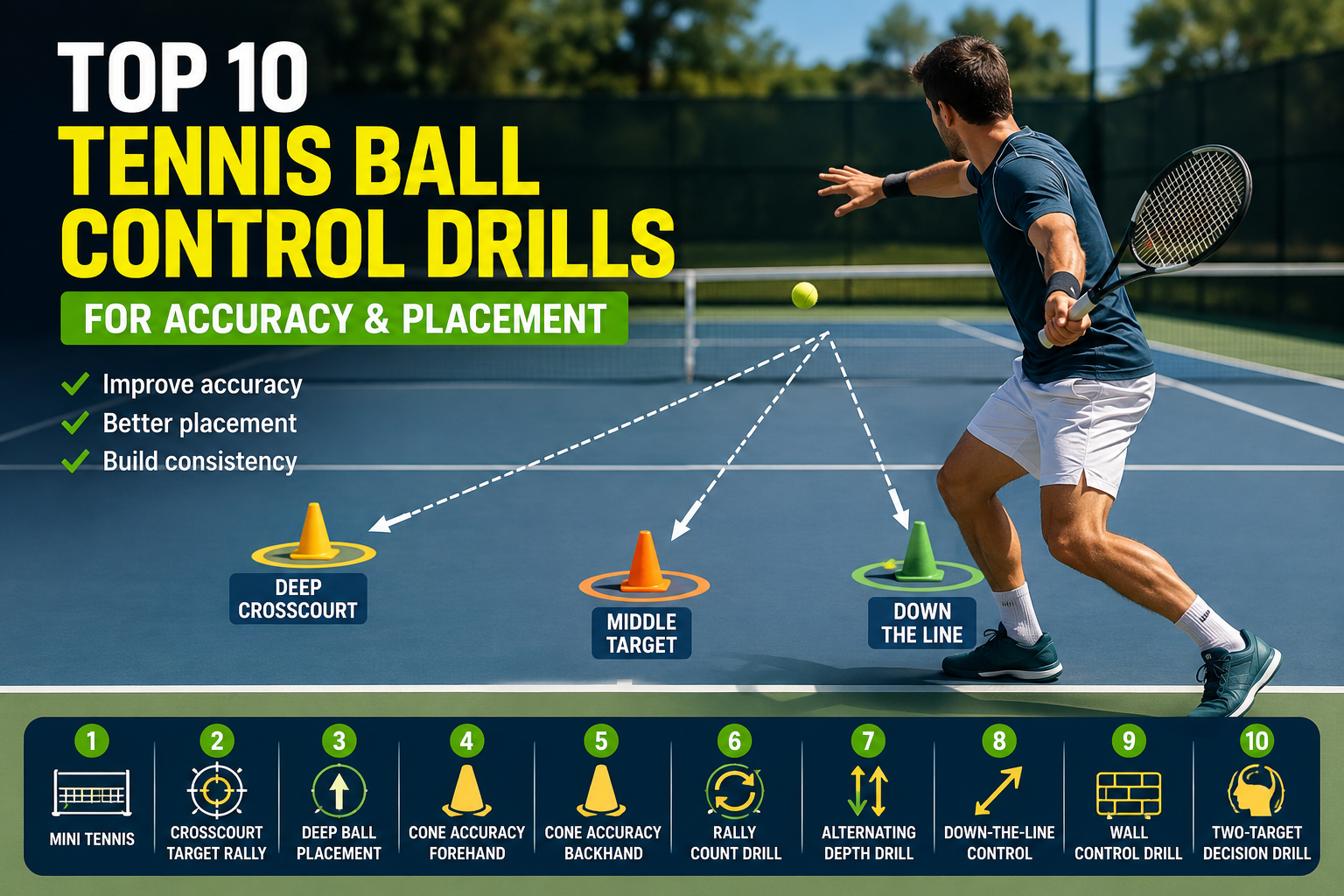
1. Mini Tennis in the Service Boxes
Mini tennis is one of the most effective tennis ball control drills for beginners. Stand close to the net with a partner and rally inside the service boxes. Use short swings and focus on soft, clean contact.
How to do it
- Start both players near the service line
- Rally only inside the service boxes
- Keep the ball low to medium height
- Aim for 20 controlled shots in a row
What it improves
- Touch
- Soft hands
- Clean contact
- Control over pace
This drill teaches you not to overhit. It also helps you feel the ball on the strings more clearly.
2. Crosscourt Target Rally
Crosscourt rallies are safer than down-the-line shots because the court gives you more space and net clearance. This makes them ideal for beginner tennis ball control drills.
How to do it
- Place a target area with cones or markers in the crosscourt side
- Rally with a partner
- Try to land each ball in that target zone
- Count how many out of 10 hit the area
What it improves
- Directional control
- Consistency
- Rally tolerance
- Margin over the net
This drill also helps you understand why crosscourt tennis is such a reliable pattern in real points.
3. Deep Ball Placement Drill
Depth is a huge part of control. If your shots land too short, your opponent can attack easily. One of the best tennis ball control drills is learning to send the ball deeper without overswinging.
How to do it
- Mark a target zone three to five feet inside the baseline
- Rally or feed balls to yourself
- Aim to land shots in that deep zone
- Focus on height and spin rather than power
What it improves
- Depth control
- Baseline consistency
- Shot tolerance
- Better point construction
A deep ball often does more damage than a hard ball. This is a key lesson for beginners.
4. Cone Accuracy Forehand Drill
This is one of the simplest tennis ball control drills for improving placement on the forehand side.
How to do it
- Put 3 to 5 cones on one side of the court
- Have a partner feed easy forehands
- Try to hit near a specific cone each time
- Repeat the same target for 10 balls, then change
What it improves
- Forehand placement
- Focus on target selection
- Repetition under control
- Shot intention
Instead of hitting randomly, you are teaching yourself to play with a purpose.
5. Cone Accuracy Backhand Drill
Beginners often feel less stable on the backhand side, which makes this one of the most useful tennis ball control drills to include in training.
How to do it
- Set up cones crosscourt and down the line
- Feed comfortable backhands
- Aim for the same cone several times before switching
- Stay balanced through contact
What it improves
- Backhand consistency
- Body control
- Better directional awareness
- Confidence on weaker shots
Do not chase speed here. Prioritize a smooth swing and clean follow-through.
6. Rally Count Drill
Sometimes the best way to improve control is simply to keep the ball in play longer. This is why rally-based tennis ball control drills work so well.
How to do it
- Rally with a partner from the baseline
- Set goals like 10, 15, or 20 balls in a row
- If you miss early, restart
- Focus on steady rhythm and net clearance
What it improves
- Patience
- Ball tolerance
- Mental discipline
- Overall consistency
This drill is especially helpful for beginners who lose control because they rush points too early.
7. Alternating Short and Deep Drill
Control is not only about hitting every ball to the same place. Good players can vary depth. This makes alternating-depth tennis ball control drills very valuable.
How to do it
- Hit one ball short into the service box
- Hit the next ball deep near the baseline
- Continue alternating short and deep
- Use controlled swings and good balance
What it improves
- Feel
- Touch
- Depth variation
- Court awareness
This drill teaches you how to change ball length without losing consistency.
8. Down-the-Line Control Drill
Down-the-line shots require more precision because the target is smaller and the net is higher at the edges. That is why this belongs in your tennis ball control drills routine once you are comfortable crosscourt.
How to do it
- Place a long target lane down the line
- Feed or rally slower balls
- Aim to keep the ball inside that lane
- Start at medium pace only
What it improves
- Precision
- Direction change
- Balance through contact
- Tactical awareness
This is not a power drill. Accuracy comes first.
9. Wall Control Drill
A wall is excellent for solo practice because it gives instant feedback. If you hit too hard or with poor direction, you notice it immediately. Wall-based tennis ball control drills are great when you do not have a partner.
How to do it
- Mark a target box on the wall if possible
- Rally at a steady pace
- Try to send each ball to the same area
- Maintain rhythm for 30 to 50 hits
What it improves
- Repetition
- Timing
- Feel
- Independent training habits
Keep your swings compact and stay light on your feet between hits.
10. Two-Target Decision Drill
This final drill combines placement and thinking. It is one of the most useful tennis ball control drills for preparing beginners for real match situations.
How to do it
- Set one target crosscourt and one target down the line
- Have a partner feed neutral balls
- Before each shot, call out your target
- Hit with full commitment to that direction
What it improves
- Intentional placement
- Shot decision-making
- Focus under pressure
- Match-style ball control
This drill builds the habit of choosing a target before swinging, which is essential in real points. For a broader understanding of tennis rules and standards, the International Tennis Federation also provides useful official resources.
Tips to Get Better Results from Ball Control Drills
To make these tennis ball control drills work better, keep these simple tips in mind:
Stay relaxed
A tight arm usually causes poor feel. Hold the racquet firmly but not too tightly.
Use margin
Aim higher over the net and inside the lines. Safer targets produce more consistent results.
Move your feet
Poor ball control often starts with poor positioning. Small adjustment steps matter a lot.
Focus on contact
Try to watch the ball into the strings. Clean contact is the foundation of control.
Build gradually
Start slow. Once you can control the ball at an easy pace, then increase speed.
Beginners can also review official guidance from the USTA to better understand practice habits, court basics, and player development.
Sample Beginner Ball Control Session
Here is a simple 30-minute practice session you can follow:
- 5 minutes: Mini tennis in the service boxes
- 5 minutes: Crosscourt target rally
- 5 minutes: Deep ball placement drill
- 5 minutes: Cone accuracy on forehand side
- 5 minutes: Cone accuracy on backhand side
- 5 minutes: Rally count challenge
This is a practical way to use tennis ball control drills without making practice too complicated.
Common Mistakes to Avoid
When doing ball control practice, beginners often make these mistakes:
- Trying to hit winners during drills
- Swinging too fast too soon
- Ignoring footwork
- Choosing targets that are too close to the lines
- Practicing without a clear goal
Remember, the goal of tennis ball control drills is not to hit flashy shots. The goal is to build reliable, repeatable control.
Final Thoughts
If you want to improve your consistency, accuracy, and placement, start with the basics and repeat them often. These tennis ball control drills will help you develop softer hands, better depth, smarter placement, and more confidence in rallies. Beginners do not need complicated training to improve. They need focused repetition and clear targets.
Start with mini tennis, crosscourt targets, and rally count drills. Then add depth work, cone drills, and decision-based practice as you improve. Over time, these habits will make your shots more dependable and your overall game much stronger.
For the next step in your development, make sure to also read How to Control Power & Accuracy in Tennis Shots, because better shot control and better ball placement always work together.