
You do not need a coach, a hitting partner, or a full group session to get better at tennis. With the right plan, solo tennis drills can help you improve footwork, timing, control, balance, and confidence. Many beginners assume they can only improve when someone is feeding them balls, but that is not true. A lot of progress comes from repetition, body awareness, and learning how to train with purpose when you are alone.
The best thing about solo tennis drills is that they are flexible. You can do them on a full court, near a wall, in a driveway, or even in a small open space at home. Some focus on movement, some help with technique, and others train your consistency. Together, they build the foundation every beginner needs.
If you want to improve without waiting for a partner, these solo tennis drills will help you make your practice sessions more productive.
Why Solo Practice Matters in Tennis
For beginners, solo practice is one of the easiest ways to build consistency. When you repeat movements alone, you start noticing details that are easy to miss during match play. You become more aware of your grip, your ready position, your balance, and your recovery steps.
Another benefit of solo tennis drills is that they help you develop discipline. When you practice by yourself, every rep has to be intentional. That mindset is valuable because tennis improvement does not come only from playing points. It comes from doing the basics correctly over and over again.
Solo training is also useful when you are short on time. A focused 20-minute session can still help you sharpen your movement and technique. If you combine the right solo tennis drills with regular match practice later, you will improve much faster.
Before starting, keep two things in mind. First, quality matters more than speed. Second, stop whenever your form starts to break down. Practicing with poor technique only builds bad habits.
1. Shadow Swing Drill
This is one of the simplest but most effective solo tennis drills for beginners. Stand in ready position and practice your forehand and backhand swings without a ball. Focus on your grip, shoulder turn, contact point, and follow-through.
Do 10 to 15 slow forehands, then 10 to 15 backhands. After that, repeat them at a more realistic speed. The goal is to make your swing feel smooth and repeatable.
This drill helps because it removes pressure. You are not worried about hitting the ball. You are only training clean mechanics. Beginners often rush into hitting before learning the motion properly, and that slows improvement.
2. Split Step and Recovery Drill
Footwork is just as important as stroke technique. For this drill, imagine you are receiving shots from side to side. Start in the middle, do a split step, move two or three steps to one side, shadow a shot, then recover back to the middle.
Repeat the same pattern to the other side. Try this for 30 to 60 seconds at a time.
Among all solo tennis drills, this one is excellent for teaching movement habits. It helps you stay light on your feet, react faster, and recover after every shot. Many beginners hit one shot and forget to return to position. This drill helps fix that early.
3. Cone or Marker Footwork Drill
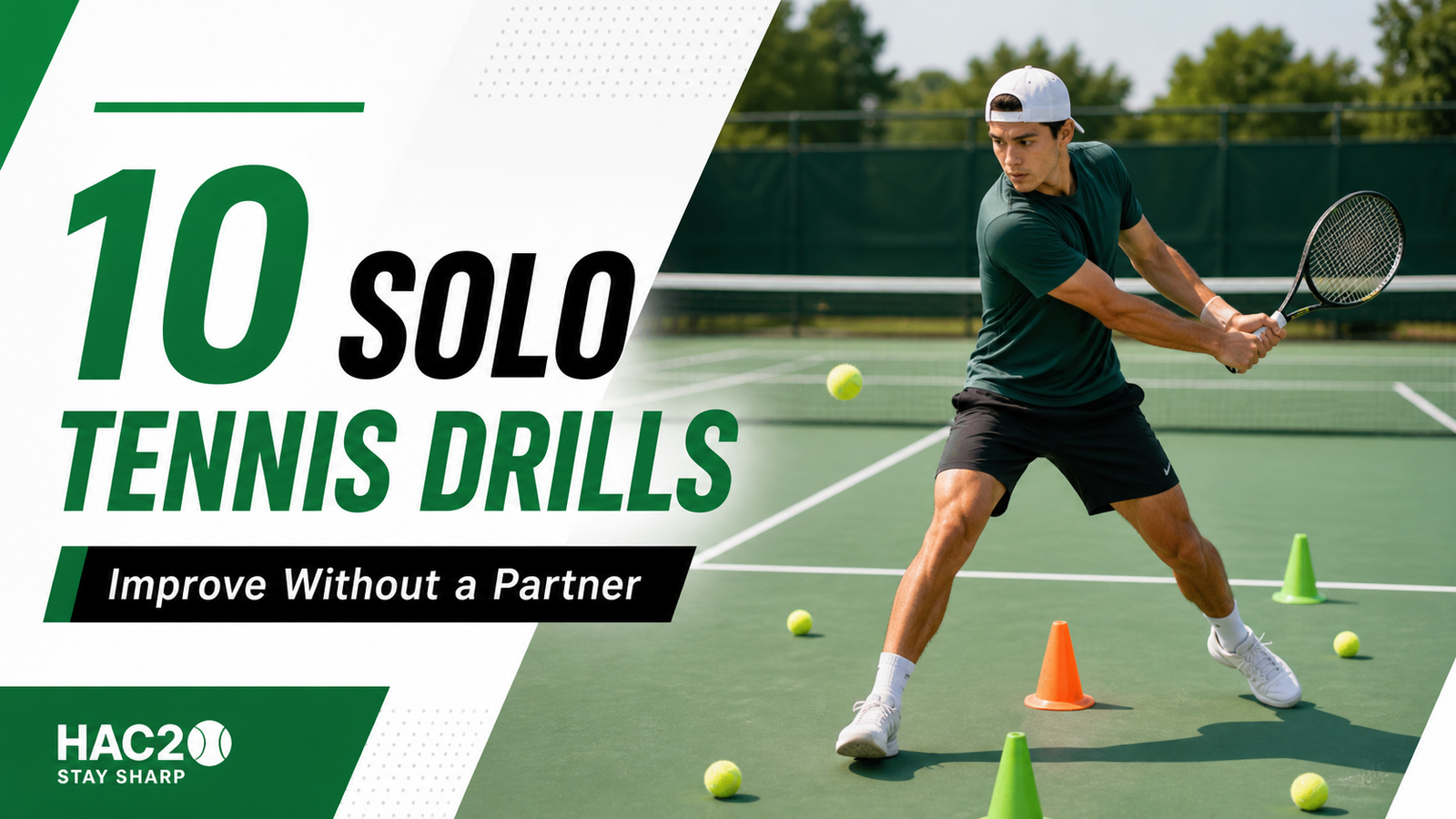
Place three cones or markers in a line: left, center, and right. Start in the center, shuffle to the left cone, return to center, shuffle to the right cone, and return again. Keep your knees bent and stay balanced.
You can also add a shadow swing each time you reach a cone. That makes the movement feel more like real tennis.
This is one of the most useful solo tennis drills for players who need better court coverage. It trains direction changes, balance, and quick adjustment steps. Even if you are not hitting balls, your movement can improve a lot from this simple pattern.
4. Self Drop Forehand Drill
Hold a ball in your non-dominant hand, drop it in front of you, and hit a controlled forehand after one bounce. The goal is not power. The goal is clean contact and control.
Start slowly and aim for a consistent swing path. If possible, direct the ball into a fence, open court, or safe hitting area.
This is one of the best solo tennis drills for beginners because it adds a real ball without requiring a partner. It helps you work on timing and contact point while still keeping the drill simple.
5. Self Drop Backhand Drill
This drill is similar to the forehand version, but now you focus on the backhand. Drop the ball, let it bounce once, and hit a controlled backhand. If you use a two-handed backhand, pay attention to shoulder turn and balance. If you use one hand, focus on spacing and stability.
Beginners often avoid backhand practice because it feels less natural. That is exactly why this drill is important. Good solo tennis drills should not only train your strengths. They should also help you improve weaker areas.
6. Serve Toss Practice
You do not always need to hit full serves to improve your serve. One of the best ways to build consistency is by practicing your toss. Stand in your serving stance and toss the ball so it lands in the ideal contact zone in front of you.
Do 20 to 30 repetitions and pay attention to how controlled the toss feels. A bad toss makes the whole serve harder, so this simple drill can make a big difference.
This belongs on every beginner list of solo tennis drills because serve problems often start before the swing even begins. If your toss becomes reliable, the rest of the motion becomes much easier to learn.
7. Ball Bounce Control Drill
Take your racquet and bounce the ball repeatedly on the strings. Start with forehand-side bounces, then backhand-side bounces, then alternate if you can. Try to keep the ball under control without chasing it around too much.
This drill looks basic, but it builds feel. It improves hand-eye coordination, racquet control, and touch. Those qualities matter more than many beginners realize.
Simple solo tennis drills like this are especially helpful for new players who still feel awkward with the racquet in their hand. The more comfortable you become controlling the ball, the more confident you will feel in real rallies.
8. Target Swing Drill
Place a cone, bag, or visual marker on the court and imagine sending your shot to that target. Even without hitting a live ball, you can still train direction. Do shadow forehands and backhands while focusing on aiming toward the same spot.
If you are using self-drop hits, this becomes even more effective. Try to send the ball toward your chosen target again and again.
This is one of the smartest solo tennis drills because tennis is not only about hitting the ball. It is about sending it with purpose. Beginners who practice direction early usually become more consistent players later.
9. Wall Preparation Drill
If you have access to a wall, start with a simple preparation drill before doing full wall rallies. Stand a few feet away, shadow your ready position, unit turn, and recovery between imagined shots. Then hit easy balls against the wall while focusing on rhythm rather than speed.
This drill prepares you for more advanced wall work and helps connect footwork to stroke timing. For more structured wall-based training, read our guide on Wall Practice Tennis Drills for Beginners (Improve Fast at Home). That article goes deeper into how wall sessions can improve rhythm and consistency.
Wall-based practice is often included in the best solo tennis drills because it gives you repeated contact without needing another player.
10. Mini Routine Drill
The final drill is to combine everything into a short routine. For example:
- 10 shadow forehands
- 10 shadow backhands
- 20 split step recoveries
- 10 self-drop forehands
- 10 self-drop backhands
- 15 serve tosses
- 30 seconds of ball bounce control
This type of circuit helps you turn individual movements into a real practice session. It also makes your training more engaging. Instead of doing one thing for too long, you move from one skill to another with purpose.
Many beginners get the most value from solo tennis drills when they organize them into a repeatable routine like this. A short structured session is easier to follow and easier to improve over time.
Common Mistakes to Avoid During Solo Practice
Even the best drills can become less effective if you practice carelessly. One mistake is going too fast. Fast reps may feel more athletic, but slow and correct reps are better for building technique.
Another mistake is practicing without a goal. Decide what you want to improve before each session. Maybe it is balance, maybe timing, maybe movement. Focus on one or two priorities.
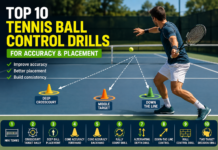
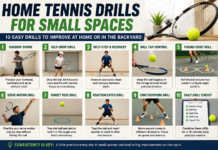
A third mistake is ignoring space limitations. If you do not have much room, forcing big movements can be unsafe or unproductive. In that case, check out Best Tennis Drills for Small Spaces (Home + Backyard) to keep practicing in a way that fits your environment.
How Often Should Beginners Do Solo Drills?
You do not need to spend hours every day. For most beginners, 15 to 30 minutes of focused work, three to five times per week, is enough to see progress. The key is consistency.
Try to rotate your sessions. One day you can focus more on movement. Another day you can focus on self-drop hitting and serve toss work. The best solo tennis drills are the ones you can repeat regularly without burning out.
If you combine solo sessions with occasional partner practice or lessons, you will improve even faster because you will be reinforcing the same skills in different ways. These solo tennis drills are even more effective when combined with structured rebound work. If you want more at-home repetition, see our Wall Practice Tennis Drills for Beginners (Improve Fast at Home) guide. And if you have limited room to train, our Best Tennis Drills for Small Spaces (Home + Backyard) article shares practical ideas for home and backyard practice. Beginners can also explore official learning resources from the USTA to understand the fundamentals of tennis development.
Final Thoughts
Training alone does not have to feel limiting. In fact, it can be one of the smartest ways to improve your game. The right solo tennis drills help you build stronger fundamentals, better footwork, and more confidence without depending on anyone else’s schedule.
Start simple. Focus on movement, control, and clean technique. Do not worry about looking advanced. Beginners improve fastest when they master the basics first. Over time, these solo tennis drills can make your on-court sessions more productive and your match play more comfortable.
If you want to keep building your solo training plan, continue with Wall Practice Tennis Drills for Beginners (Improve Fast at Home) for wall-based repetition, or explore Best Tennis Drills for Small Spaces (Home + Backyard) if you need practical options for limited areas.