

Starting tennis can feel exciting, but it can also feel overwhelming when you are not sure what to practice first. Many beginners make the mistake of hitting random balls without a clear structure. That often leads to slow improvement, poor habits, and frustration.
A simple tennis beginner plan can make a huge difference.
This 30-day tennis beginner improvement plan is designed to help new players build confidence, improve technique, and create a strong practice routine without making the game feel too complicated. Before starting, read our guide on how often beginners should practice tennis so you can choose a routine that fits your schedule. Instead of trying to learn everything at once, this plan breaks your first month into four manageable weeks. This tennis beginner plan is built for new players who want a simple way to improve without feeling overwhelmed.
By the end of these 30 days, you should have a better understanding of the basics, improved control over your shots, more confidence on court, and a much clearer idea of how to keep progressing.
If you are still unsure about your overall weekly schedule, read our guide on how often beginners should practice tennis to build a routine that fits your level and lifestyle.
What This 30-Day Tennis Training Plan Is Designed to Do
This tennis beginner plan focuses on steady progress, better habits, and simple practice structure for new players. This beginner tennis improvement plan focuses on five key areas:
- learning correct fundamentals
- building hand-eye coordination
- improving movement and footwork
- developing consistency
- creating a realistic practice habit
This is not a plan for becoming an advanced player in one month. It is a plan for building a strong beginner foundation the right way.
The goal is progress, not perfection.
Before You Start: What You Need
You do not need expensive gear or elite-level coaching to begin this plan. You only need:
- a beginner-friendly tennis racquet
- comfortable tennis shoes
- a few tennis balls
- access to a court or practice wall
- 20 to 45 minutes per session
- patience and consistency
If you are completely new to tennis, focus on proper movement and clean contact before trying to hit powerful shots.
Week 1: Build the Basics
In the first week of this tennis beginner plan, your goal is to feel comfortable with the racquet, the court, and basic ball contact.
Main Goal:
Get comfortable with the court, racquet, grip, and basic ball contact.
The first week is all about feeling less awkward. Every beginner needs time to adjust to the court, the bounce of the ball, and how the racquet feels in the hand. Do not rush this stage.
What to Practice in Week 1
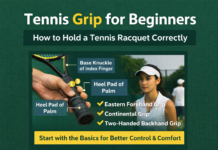
Day 1: Learn the court and basic grip
Spend time understanding the tennis court layout, the net, singles lines, doubles lines, service boxes, and baseline. Then practice holding the racquet correctly.
You do not need to master every grip right away. Just focus on learning a comfortable beginner-friendly grip and getting used to the racquet in your hand.
Day 2: Ball control and simple contact
Bounce the ball on your racquet strings. Try forehand taps, backhand taps, and small control drills. This helps build touch and coordination.
Day 3: Short forehand and backhand swings
Use slow, controlled mini swings. Stand close to the net or wall and focus on meeting the ball cleanly instead of swinging hard.
Day 4: Movement basics
Practice side steps, split steps, and recovery steps without the ball. Good movement habits should start early.
Day 5: Soft rally practice
If you have a partner, try very short rallies. If not, use a wall. The goal is simply to keep the ball in play.
Day 6: Light review session
Go over everything from the week again. Repeat the easiest drills and focus on clean contact.
Day 7: Rest or active recovery
Take a break or do some light stretching and walking.
For official game basics and match regulations, you can review the ITF Rules of Tennis.
Week 1 Success Target
By the end of Week 1, you should:
- feel more comfortable holding the racquet
- understand the court basics
- make cleaner contact with the ball
- move with more confidence
Week 2: Build Consistency
Main Goal:
Start creating repeatable strokes and a real beginner practice habit. By this stage, your tennis beginner plan should start feeling more natural and easier to follow.
Now that the racquet and court feel more familiar, it is time to work on consistency. At this stage, keeping the ball in play matters more than power.
A lot of beginners want to hit winners too early. That usually slows progress. Consistency is what creates improvement.
What to Practice in Week 2
Day 8: Forehand repetition
Focus only on forehands. Use short feeds or wall practice. Work on:
- watching the ball
- smooth swing path
- finishing the swing under control
Day 9: Backhand repetition
Repeat the same process with the backhand. Start slowly and keep your body balanced through the shot.
Day 10: Footwork and recovery
Combine movement with simple hitting drills. Hit one ball, recover to the middle, and get ready again. Good beginners learn that tennis is not just about the swing. It is also about getting into position early.
Day 11: Rally rhythm
Try slow rallies with a partner. Count how many balls you can keep in play without worrying about who wins the point.
Day 12: Practice routine session
Use a structured beginner session instead of random hitting. Our 20-minute daily tennis practice routine for beginners is a great way to make your training more organized.
Day 13: Serve introduction
Do not try to hit a big serve yet. Just work on:
- stance
- toss
- smooth upward motion
- simple contact
Day 14: Review and reset
Repeat the strokes that still feel weakest. Most likely, one side will feel more natural than the other. That is normal.
Week 2 Success Target
By the end of Week 2, you should:
- rally a little longer than before
- feel less rushed during practice
- understand how practice structure helps
- begin building muscle memory
Week 3: Improve Control and Confidence
By Week 3, this tennis beginner plan should help you feel more confident, more balanced, and more consistent during practice.
Main Goal:
Start placing the ball better and moving with more purpose.
Week 3 is where many beginners begin to notice real improvement. Shots feel less random, movement feels more natural, and confidence starts growing.
This is also the stage where frustration can appear, because you may expect too much too soon. Stay patient. Improvement in tennis is never perfectly linear.
What to Practice in Week 3
Day 15: Direction control
Try hitting cross-court and down-the-middle targets. You do not need perfect placement. Just begin aiming with intention.
Day 16: Depth control
Practice hitting shorter and deeper balls. Learn how swing length and contact affect where the ball lands.
Day 17: Better recovery between shots
Work on getting back into a ready position after every shot. This helps you prepare for the next ball instead of reacting late.
Day 18: Serve and return basics
Hit easy serves and practice blocking or guiding the return back into play. At beginner level, simply starting the point well is already a big step forward.
Day 19: Longer rally goal
Set a simple target, such as 5-ball rallies or 10-ball rallies. Tracking these small wins helps you stay motivated.
Day 20: Combine movement and strokes
Do beginner drills that force you to move a little before hitting. This helps connect your footwork and technique.
Day 21: Recovery day
Rest, stretch, and reflect on what is improving and what still feels difficult.
Week 3 Success Target
By the end of Week 3, you should:
- hit with better control
- recover faster after shots
- understand basic rally patterns
- feel more confident during practice
Week 4: Turn Practice into Real Progress
Main Goal:
Bring your basic skills together in a simple match-like way.
The final week is about using what you have learned more naturally. You are still a beginner, but now you are becoming a more organized and intentional beginner.
This is where your tennis beginner plan starts turning into real momentum.
What to Practice in Week 4
Day 22: Mini match practice
Play points on a smaller part of the court or start with underhand feeds. This reduces pressure and helps you focus on control.
Day 23: Serve plus first shot
Practice starting the point with a simple serve, then trying to hit the next ball safely into the court.
Day 24: Shot tolerance
See how many controlled shots you can hit before making an error. This teaches patience and discipline.
Day 25: Footwork focus
Dedicate one session mostly to movement. Better feet often produce better strokes.
Day 26: Weakness day
Spend time on the area that gives you the most trouble, whether that is backhand, serve, movement, or timing.
Day 27: Full beginner practice session
Use everything you have worked on:
- warm-up
- forehands
- backhands
- movement
- serves
- rally practice
Day 28: Light match play
Play a few games with relaxed expectations. Focus on applying what you learned instead of trying to win every point.
Day 29: Progress review
Ask yourself:
- Am I making cleaner contact?
- Am I moving better?
- Am I more confident than on Day 1?
- Which shot still needs the most work?
Day 30: Celebrate and plan the next month
Finishing a 30-day tennis training plan is already an achievement. Progress in tennis comes from stacking good weeks together. Use this final day to create your next simple monthly goal.
Week 4 Success Target
By the end of Week 4, you should:
- feel more comfortable playing points
- have a better understanding of your strengths and weaknesses
- feel more consistent than when you started
- be ready for a more advanced beginner plan
Sample Weekly Beginner Tennis Schedule
You can adjust this tennis beginner plan to fit a 3-day, 4-day, or 5-day weekly routine. Here is a simple version of how your month can look:
3-Day Schedule
- Day 1: technique
- Day 2: movement and drills
- Day 3: rally practice or match play
4-Day Schedule
- Day 1: forehand and backhand
- Day 2: footwork and ball control
- Day 3: serve and return
- Day 4: practice points or wall work
5-Day Schedule
- Day 1: fundamentals
- Day 2: rally practice
- Day 3: movement
- Day 4: serve work
- Day 5: review session
Choose the version that fits your time and recovery level. Consistency matters more than trying to do too much.
Common Mistakes to Avoid During This 30-Day Plan
Trying to hit too hard
Beginners often think harder shots mean better shots. In reality, controlled shots build faster improvement.
Practicing without structure
Random hitting usually leads to random results. A plan gives every session a purpose.
Ignoring footwork
Many beginners blame their swing when the real problem is poor positioning.
Skipping recovery
Rest is part of progress. Tired players often build bad habits.
Comparing yourself to better players
Your only job is to improve from where you started.
The USTA also offers useful beginner resources and development guidance for new players.
What Happens After These 30 Days?
After completing this tennis beginner plan, most players are ready to move into more structured drills, match play, and technique work. After finishing this tennis beginner plan, your next step should be to continue building consistency, improve your weakest shot, and slowly introduce more match play and structured drills. The best part of this tennis beginner plan is that it helps you improve step by step instead of trying to learn everything at once.
A strong first month gives you something even more valuable than perfect technique: momentum.
And in tennis, momentum matters.
Final Thoughts
This 30-day tennis beginner improvement plan is not about becoming perfect. It is about building the right habits early, creating confidence, and making tennis feel more enjoyable from the start.
If you stay patient, practice regularly, and keep your sessions simple, you will improve more than most beginners who train without a plan.
Start small, stay consistent, and trust the process. If you stay consistent with this tennis beginner plan, you will build a much stronger foundation for long-term improvement.