
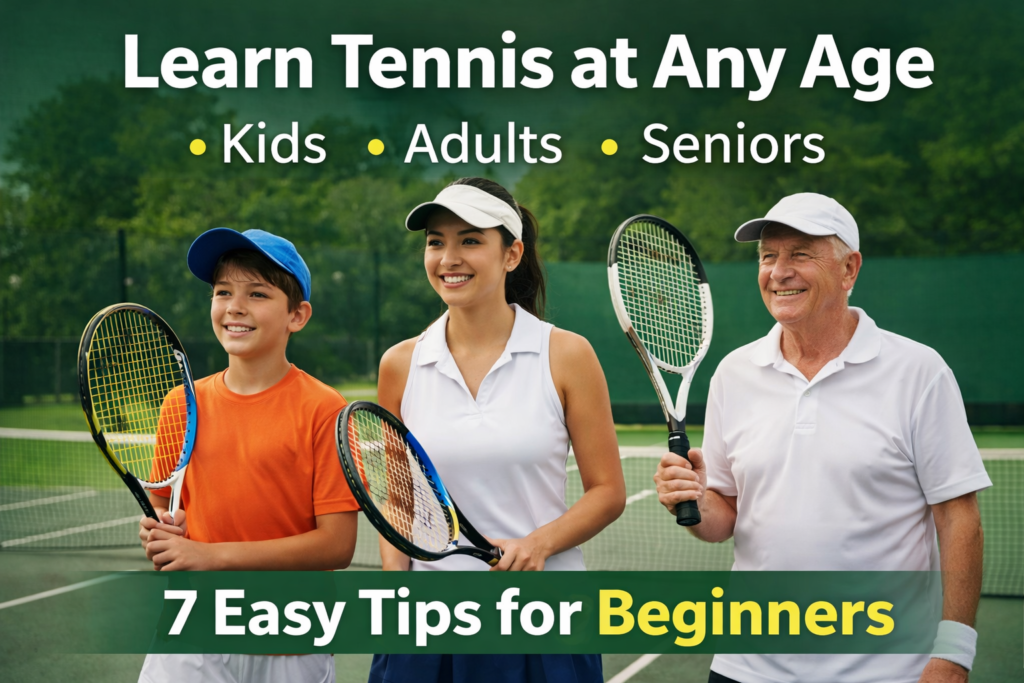
Can You Learn Tennis at Any Age? (Kids–Seniors)
Many people assume tennis is a sport you need to start as a child to enjoy or play well. That idea stops a lot of beginners before they ever step on court. The truth is much more encouraging: you can learn tennis at any age.
Whether you are introducing a child to the game, starting as a teenager, picking up a racquet as an adult, or trying tennis later in life as a senior, there is no single “perfect” age to begin. Tennis is one of the few sports that can be adapted to different fitness levels, learning styles, and personal goals.
Some people want to compete. Others want exercise, social connection, stress relief, or simply a new hobby. Tennis can offer all of that. Your starting age may shape how fast you progress or what type of training works best, but it does not decide whether you can enjoy the sport. Many people wonder if they can learn tennis at any age, and the answer is yes.
The Short Answer: Yes, You Can Learn Tennis at Any Age
If you are wondering whether it is too late to start, the answer is no. If your goal is to learn tennis at any age, consistency matters more than talent. Tennis is a skill-based sport, which means improvement comes from learning, repetition, and consistency. Natural athletic ability can help, but it is not required to get started.
A 7-year-old beginner, a 27-year-old office worker, and a 67-year-old retiree can all learn tennis. They may train differently, use different equipment, or move at different speeds, but they can all build real skills and enjoy the game.
That is why so many people search for adult beginner tennis advice. More adults are now joining local clubs, taking beginner lessons, and using tennis as a long-term fitness activity. The same is true for seniors who want a lower-impact sport that still keeps them active and mentally sharp.
Why Tennis Works for So Many Ages
Tennis is flexible in a way that many sports are not. You do not need to follow one fixed path. You can adjust the game to suit your age and ability level.
Here are a few reasons tennis is beginner-friendly across age groups:
1. It can be learned step by step
You do not need to master everything at once. You can start with grip, movement, and simple rallying before moving into serves, scoring, and strategy. If you want to understand official scoring and match structure, reviewing the ITF Rules of Tennis can help.
2. It supports different goals
Some players want competition. Others only want fun and exercise. Both approaches are valid.
3. It can be played at different intensities
A child may run constantly, while an older beginner may focus more on controlled movement and shorter sessions. Tennis still works for both.
4. It combines physical and mental benefits
Tennis improves coordination, timing, footwork, focus, and decision-making. It is not just about hitting hard.
Learning Tennis as a Child
Children often learn quickly because they are open to instruction and adapt naturally to movement patterns. They also tend to enjoy learning through games and drills.
For kids, the biggest benefits include:
- Better coordination
- Improved balance and agility
- Stronger focus and discipline
- Healthy physical activity
- Social development through coaching and group lessons
The key for children is to keep tennis fun. Too much pressure too early can reduce interest. A positive introduction matters more than perfect technique in the beginning.
Smaller racquets, lower-compression balls, and age-appropriate drills make tennis easier for kids to learn. When the game feels achievable, confidence grows faster.
Learning Tennis as a Teenager
Teenagers are in a strong position to improve quickly. At this age, players can usually understand technical coaching better than young children, while still having the physical adaptability to build good habits fast.
Teens may learn tennis for different reasons:
- joining a school team
- improving fitness
- making friends
- trying a new sport
- building confidence
If a teenager starts with regular practice and proper instruction, progress can come surprisingly fast. Even without a childhood tennis background, many teens become strong recreational or competitive players over time.
Learning Tennis as an Adult
This is where many people hesitate, but adults should not underestimate their potential. Starting later does not mean starting too late. For many people, adult beginner tennis is less about age and more about patience, repetition, and realistic goals. Adult beginner tennis players often improve faster when they follow a simple weekly routine and focus on fundamentals.
In fact, adults often bring major strengths to the learning process:
- better patience
- stronger discipline
- clearer goals
- more self-awareness
- willingness to practice with purpose
The biggest challenge for an adult beginner tennis player is usually not age. It is unrealistic expectations. Adults sometimes compare themselves to people who have played for years and feel discouraged too quickly.
The better mindset is this: focus on progress, not perfection.
If you start with the basics, take lessons when possible, and practice consistently, you can absolutely become a solid tennis player. Many adults build enough skill to rally confidently, play social matches, and even join local leagues.
Learning Tennis as a Senior
The good news is that adults and seniors can learn tennis at any age with the right plan. Seniors can learn tennis too, especially when they begin with a smart and realistic approach. At this stage, goals may be less about competition and more about movement, enjoyment, coordination, and staying active.
Tennis can be excellent for seniors because it encourages:
- regular movement
- hand-eye coordination
- social activity
- mental sharpness
- balance and body control
The important thing is to begin gradually. Shorter sessions, proper warm-ups, supportive shoes, and beginner-friendly drills can make the experience safer and more enjoyable.
Some seniors prefer doubles over singles because it requires less court coverage. Others enjoy casual hitting sessions rather than full matches. Both are great ways to learn.
Does Starting Age Affect How Good You Can Become?
Yes, but not in the way many people think.
Starting earlier can help if your goal is elite competition. Children who begin young often have more time to build advanced technique and match experience. That matters at a high-performance level.
But for most people, that is not the real goal.
Most beginners simply want to:
- learn the game properly
- rally with confidence
- enjoy match play
- stay fit
- keep improving
For those goals, age is not the main barrier. Consistency, quality practice, and mindset matter far more.
So while starting young may help someone chase professional dreams, starting later still gives you every chance to enjoy tennis and become genuinely good at it.
Common Myths About Learning Tennis Later in Life
Myth 1: “Adults cannot learn proper technique”
False. Adults can absolutely learn correct fundamentals. It may take patience to replace old habits, but strong technique can still be developed.
Myth 2: “You must be very fit before you start”
No. Tennis can help you become fitter over time. You do not need to arrive in peak shape before beginning.
Myth 3: “Seniors should avoid tennis”
Not true. Seniors just need a suitable training style, safe pacing, and realistic expectations.
Myth 4: “Kids should start as early as possible or it is too late”
Children learn tennis at different ages and progress differently depending on coaching, confidence, and interest. Early exposure can help, but children do not need to start at an extremely young age to enjoy or succeed in tennis.
How to Start Tennis Successfully at Any Age
The process looks slightly different depending on your age, but the core principles stay the same.
Start with the basics
Learn grip, ready position, simple footwork, and basic strokes first.
Use the right equipment
A suitable racquet, comfortable shoes, and beginner-friendly balls can make a huge difference.
Keep sessions realistic
Do not train too hard too soon. Short, consistent sessions work better than occasional overtraining.
Focus on enjoyment
People improve faster when they actually enjoy the process.
Get guidance when possible
A coach, beginner class, or structured online guide can reduce confusion and help you build good habits early. Beginners can also explore training basics and starter advice through USTA tennis resources.
If you are still wondering when the ideal starting point is, read our guide on the best age to start tennis for a full breakdown by kids, teens, adults, and seniors.
Best Approach by Age Group
Kids
- Keep it fun
- Use lighter equipment
- Focus on coordination and enjoyment
Teens
- Build solid fundamentals
- Practice regularly
- Combine drills with match play
Adults
- Be patient with yourself
- Focus on consistency
- Avoid comparing your beginning to someone else’s middle
Seniors
- Prioritize movement quality
- Warm up properly
- Start with slower, controlled sessions
What Matters More Than Age
When people ask whether they can learn tennis at any age, they often focus too much on the number itself. In reality, these factors matter more:
- attitude
- consistency
- coaching
- fitness level
- recovery habits
- willingness to learn
A motivated 45-year-old who practices twice a week may improve faster than a younger player who rarely trains. Age influences the path, but not the possibility.
Final Thoughts
So, can you learn tennis at any age? Yes, absolutely.
Kids, teens, adults, and seniors can all enjoy tennis and improve with the right mindset and structure. You do not need to start young to benefit from the sport. You only need to start.
Tennis is one of the best lifetime sports because it can grow with you. It can be playful when you are young, competitive in adulthood, and active and social later in life. Your goals may change, but the game remains rewarding.
No matter your starting point, it is possible to learn tennis at any age with the right mindset and practice routine. If you have been thinking about starting, this is your sign to stop overthinking and begin. Age is not the reason to wait. It is the reason to choose the right approach and enjoy the journey.