
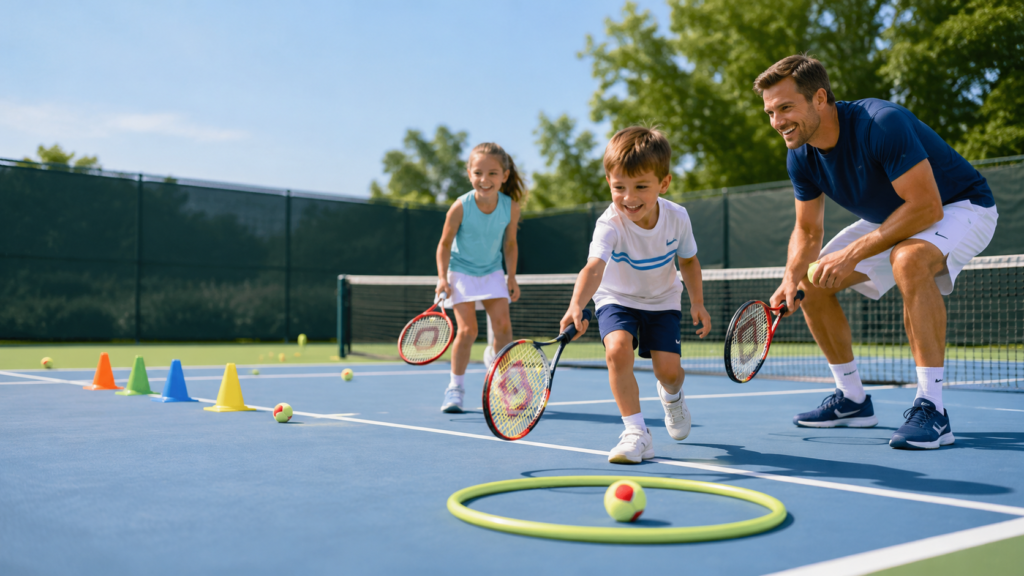
Getting children excited about tennis is much easier when practice feels like play. The best tennis drills for kids are simple, active, and fun enough to keep young players engaged without making them feel like they are doing hard work. When parents, siblings, or friends join in, learning becomes even more enjoyable. Instead of treating every session like a strict lesson, families can use games and playful drills to build confidence, coordination, and love for the sport.
In this guide, we will cover the most effective tennis drills for kids that families can do together at home, in the backyard, at the park, or on a real court. These ideas are beginner-friendly, require little equipment, and help children improve movement, timing, racket control, and focus while having fun.
If your child is just getting started, you may also want to read our guide on the best age to start tennis to understand what is realistic and helpful for different age groups.
Why Fun Matters in Youth Tennis
Children learn differently from adults. They respond better to play, variety, praise, and short activities. That is why the most successful tennis drills for kids do not feel repetitive or overly technical. A child who laughs, runs, and enjoys the session is much more likely to come back tomorrow and improve naturally over time.
Family practice also creates a positive tennis environment. Instead of focusing only on perfect form, kids begin to associate tennis with movement, teamwork, and confidence. For beginners especially, fun should come before intensity. Once the interest is strong, skill development becomes much easier.
For age-appropriate beginner development, parents can also explore USTA youth tennis resources for more guidance.
What Makes Good Tennis Drills for Kids?
Before jumping into the activities, it helps to know what works best. The most effective tennis drills for kids usually have a few things in common:
- They are easy to understand
- They involve lots of movement
- They use short rounds to avoid boredom
- They reward effort, not just results
- They can be adjusted by age and skill level
A five-year-old and a twelve-year-old will not respond to the exact same practice style. Younger children often enjoy chasing, catching, and target games. Older kids may like rallies, point challenges, and teamwork competitions. The good news is that many tennis drills for kids can be modified for both age groups.
1. Red Light, Green Light with a Tennis Ball
This is one of the simplest tennis drills for kids and works especially well for younger beginners.
How to do it:
Have the child hold a racket with a ball balanced on the strings. When you say “green light,” they walk or jog forward. When you say “red light,” they stop and try not to let the ball fall.
Why it works:
This drill improves balance, coordination, and racket control. It also teaches kids to move carefully while handling the racket.
To make it more fun:
Add “yellow light” for slow steps, or create a finish line with small rewards for effort.
2. Target Cone Challenge
Target games are some of the best tennis drills for kids because children love aiming at objects and trying to knock them down.
How to do it:
Set up cones, bottles, or soft targets on the other side of the court or yard. Feed easy balls to the child and ask them to hit toward the targets.
Why it works:
This helps kids develop direction, ball tracking, and controlled swings. It also makes tennis feel like a game instead of a lesson.
Family tip:
Parents and kids can take turns and keep score to make it more exciting.
3. Balloon Rally Game
For very young children, balloons are perfect. This is one of the safest and most accessible tennis drills for kids at home.
How to do it:
Use balloons instead of tennis balls. Players rally the balloon back and forth using rackets, hands, or even just gentle taps.
Why it works:
The slow movement of the balloon gives children more time to react. It builds hand-eye coordination and introduces rallying without pressure.
This is also a great warm-up before moving into more active tennis drills for kids on court.
4. Catch and Hit
This drill is ideal for helping children learn timing.
How to do it:
A parent tosses a ball gently. The child lets it bounce once and then taps it back. For complete beginners, start by allowing them to catch the ball after the bounce before asking them to hit it.
Why it works:
The child learns bounce timing, contact point awareness, and confidence. Among beginner tennis drills for kids, this one is excellent because it breaks the skill into easy steps.
5. Mini-Court Rally
Mini-court practice is one of the most useful tennis drills for kids when they are ready to rally with more control.
How to do it:
Stand close to the net or use a small part of the court. Rally gently using short swings and soft shots. Focus on keeping the ball in play rather than hitting hard.
Why it works:
Kids learn consistency, touch, and rhythm. Short courts reduce pressure and help build success quickly.
Family tip:
Count how many balls you can rally in a row. Try to beat your best number each week.
6. Tennis Obstacle Course
Children love movement-based games, so this is one of the most exciting tennis drills for kids for families.
How to do it:
Create a course using cones, markers, hoops, or small objects. Include running around cones, balancing a ball on the racket, tapping the ball up, and finishing with a target hit.
Why it works:
This combines footwork, coordination, and racket skills in one activity. It also keeps kids active and prevents boredom.
You can make the course different every session so the practice always feels fresh.
7. Bounce Tap Count
This drill is simple but very effective for control.
How to do it:
Ask the child to tap the ball upward with the strings and count how many taps they can do without dropping it. Then try the same with the edge or the other side of the racket.
Why it works:
This is one of those tennis drills for kids that quietly builds excellent racket feel. Over time, children become much more comfortable handling the racket and ball.
Make it family-friendly by setting personal records and celebrating improvement.
8. Forehand and Backhand Color Game
This game adds decision-making to practice.
How to do it:
Use two colored cones or markers. One color means forehand, and the other means backhand. As you toss or feed balls, call out a color. The child must move and hit the correct shot.
Why it works:
It teaches movement, listening, and stroke recognition. It also helps older kids transition from random hitting into more structured tennis drills for kids.
9. Team Relay Races
When multiple family members are involved, relay races work very well.
How to do it:
Split into teams. Each player must complete a tennis task before the next person goes. Tasks can include dribbling the ball with the racket, running to a cone, doing five taps, or hitting a target.
Why it works:
Relay races make tennis social and energetic. They are among the most enjoyable tennis drills for kids because they bring competition without too much pressure.
10. Serve Toss Game
Young players do not need to learn full serves immediately, but they can begin with the toss.
How to do it:
Ask the child to toss the ball upward and catch it with the other hand. Later, they can try tossing and gently tapping it over the net.
Why it works:
The toss is a huge part of serving. Starting early with simple toss practice makes future serve training much easier.
This is one of the smartest tennis drills for kids for long-term skill development.
11. Around-the-Circle Passing Game
This is great for families with more than two people.
How to do it:
Stand in a circle and pass the ball around with gentle racket taps or hand tosses. Try to keep the ball moving without dropping it.
Why it works:
Kids develop timing, awareness, and teamwork. It is also a low-pressure way to introduce controlled contact.
12. Freeze Tennis
This final idea is a fun way to end a session.
How to do it:
Play a gentle rally or movement game. At random times, call “freeze.” Everyone must stop immediately while keeping balance and control.
Why it works:
This improves reaction, balance, and listening skills. It is one of the easiest tennis drills for kids to set up and usually gets a lot of laughs.
Tips for Parents During Practice
To get the most from these tennis drills for kids, keep the atmosphere encouraging. Here are a few simple rules that help:
- Keep sessions short, especially for younger children
- Praise effort more than perfect technique
- Rotate drills every few minutes
- Use soft balls or foam balls when possible
- End practice while the child is still having fun
Many parents make the mistake of over-correcting every swing. In family tennis, the first goal is enjoyment. Technique can improve gradually, but confidence must come first. If you also want to understand common tennis terms and beginner-friendly tennis language, the ITF tennis glossary is a useful reference.
How Often Should Kids Practice?
For most beginners, two to four fun sessions per week are enough. The goal is not long, exhausting training. Even 20 to 30 minutes of playful practice can be very effective when the child is engaged. Consistency matters more than session length.
The best tennis drills for kids are the ones children actually want to repeat. If they ask to play again tomorrow, you are doing it right.
Final Thoughts
Tennis should feel exciting, especially in the early stages. With the right mix of movement, games, and encouragement, families can turn practice into quality time while helping children build real tennis skills. The best tennis drills for kids are not necessarily the most advanced ones. They are the ones that create smiles, confidence, and steady progress.
Start with a few simple activities, keep the energy positive, and adjust each game based on the child’s age and ability. Over time, these fun sessions can build a strong foundation in balance, racket control, focus, and love for the sport. When children enjoy the process, improvement comes much faster.