
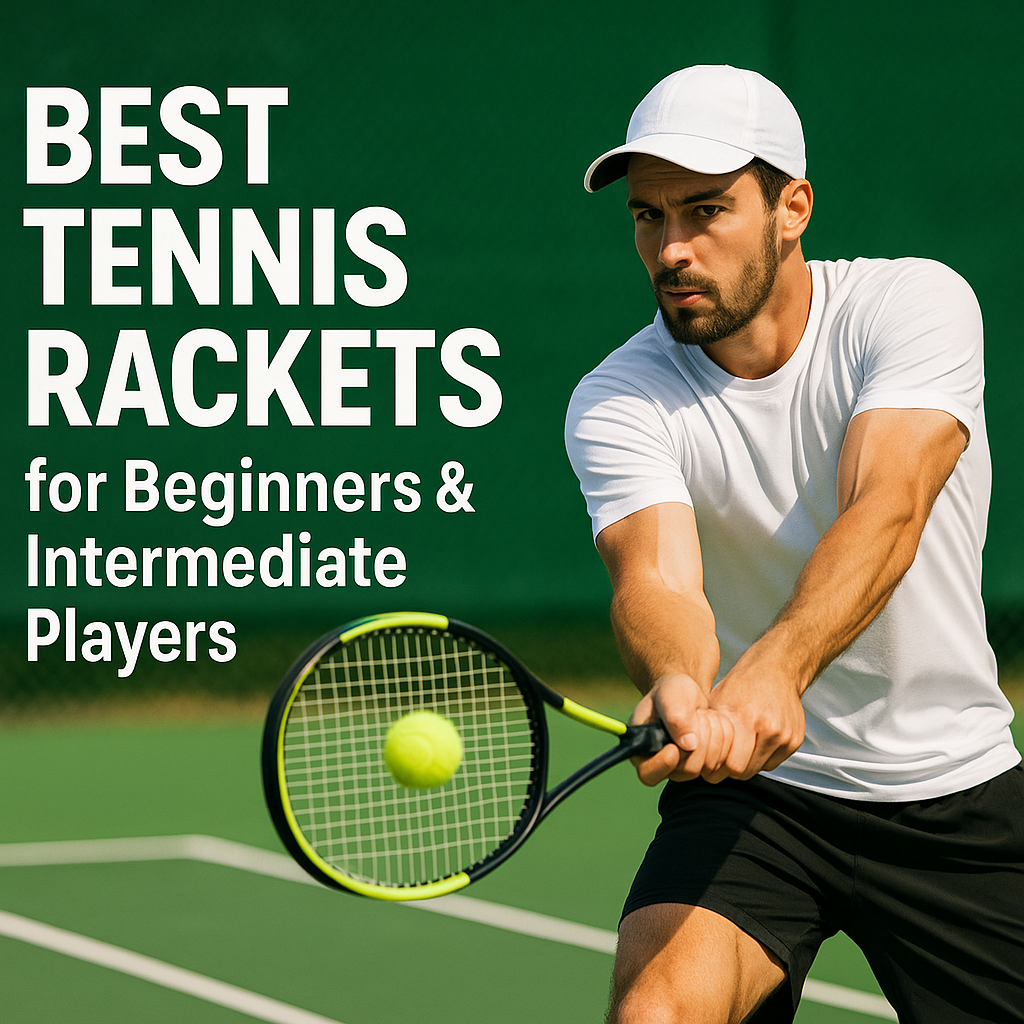
If you’re looking for a good tennis racket as a beginner or intermediate player, here’s a detailed guide to what to look for — followed by some strong racket picks that meet beginner and intermediate needs.
✅ What to look for
Understanding the key specs will help you pick a racket you’ll enjoy and improve with.
For Beginners
-
A large head size (100 in² or more) gives you a larger “sweet spot” to forgive off-centre hits. Tennis Tribe+2The Racket Sports+2
-
A lighter weight racket is easier to swing, fatigue less, and helps build good technique. Tom Lodziak Table Tennis Coaching+2Tennis HQ+2
-
A comfortable grip size, so you can handle the racket without over-gripping or straining your wrist/forearm. Tom Lodziak Table Tennis Coaching
-
You want a racket that’s forgiving and helps you play without worrying too much about “missing” the ball.
For Intermediate Players
-
You’ll often want a more balanced racket: not too heavy (so you can still swing) but enough substance to give control and stability. Do It Tennis+2Tennis Tribe+2
-
A head size often around 98-100 in² (or slightly more) is common — giving good balance of power + control. Tennis Tribe+1
-
Consider string pattern, weight, and feel (arm friendly) as your game improves. Tennis Warehouse+1
Top Specs Checklist
-
For beginners: Head size ≥ 100 in², weight under ~300 g (~10.5 oz) unstrung ideally. Tennis HQ+1
-
For intermediate: Weight might go up a bit, head size around 98-100 in², good feel/control. Tennis Tribe+1
-
Always try to swing a racket if possible (demo) to see what you feel comfortable with.
🎾 Top Racket Picks
Below are some excellent choices that many reviewers recommend for beginners or intermediate players.
Here’s a little detail about each:
-
Head TI S6: Frequently named the best overall beginner racket thanks to its large head (≈115 in²) and lightweight frame. Tennis Tribe+1
-
Wilson Clash 108: A premium beginner choice focused on comfort and arm-friendliness, good for beginners who expect to play frequently. Tennis Tribe+1
-
Prince Ripstick 100: A good transition racket — still beginner-friendly but built so you don’t feel the need to upgrade too soon. Tennis Tribe
-
Yonex EZONE 100: Highlighted as the best overall for intermediate players, offering a great mix of power + control while being arm-friendly. Tennis Tribe+1
-
Babolat Pure Drive 2025: A popular choice for intermediate players who want power and spin and are still improving their game. Tennis Warehouse+1
-
Head Boom Team: A control-oriented frame good for athletic beginners and lower intermediate players aiming to improve. Tennis Tribe
-
Wilson Blade 100UL V9: A lighter “ultra-light” intermediate frame — good for those not yet ready for heavy rackets but needing more performance.
-
Dunlop FX 500: A budget-friendly intermediate option noted for good performance without breaking the bank. Tennisnerd.net+1
🧠 How to choose which one is right for you
-
If you just started playing or play occasionally, lean toward the beginner-friendly rackets (first three). They’ll give more forgiveness and make the game more fun.
-
If you are playing regularly, improving, and looking to take control of points (baseliner, club-player, etc), then stepping up to one of the intermediate level rackets makes sense.
-
Consider your budget: you don’t need to buy the most expensive racket immediately — comfort and fit matter more than “tour-level specs”.
-
If possible, demo a couple of rackets. Even two rackets with similar specs can feel very different (swing weight, balance, vibration, etc). Many players on forums say:
“EZONE 100 and Clash 100 are common suggestions … definitely demo them all and find what works for you.” Reddit
-
Make sure when you buy: the grip size is correct, you have a decent string tension for your level (for beginners simpler strings are fine), and you feel comfortable swinging it.