

Table of Contents
ToggleBest Age to Start Tennis: Kids, Teens, Adults & Seniors Guide:
Learning tennis is not limited to childhood. Whether you’re 6 or 60, tennis offers physical, mental, and social benefits that can be enjoyed at any age. Many beginners wonder about the best age to start tennis, and the truth is that people can learn successfully at any stage of life. What matters most is choosing the right starting approach based on your age group—because kids, teens, adults, and seniors learn differently.
This guide explains the best age to start tennis, how your learning style changes over time, and what training method works best for each stage.
Is There a “Perfect” Age to Start Playing Tennis?
Technically, there is no single perfect age. Many professional players started early, but thousands of recreational players begin as adults and still reach great skill levels.
However, the best time to learn is when a person shows curiosity, interest, and consistency. Some people start at 4, others at 40—what matters is staying active and practicing regularly.
If you’re completely new to tennis, first check out How to Start Playing Tennis (Beginner Guide) to make your first steps easier.

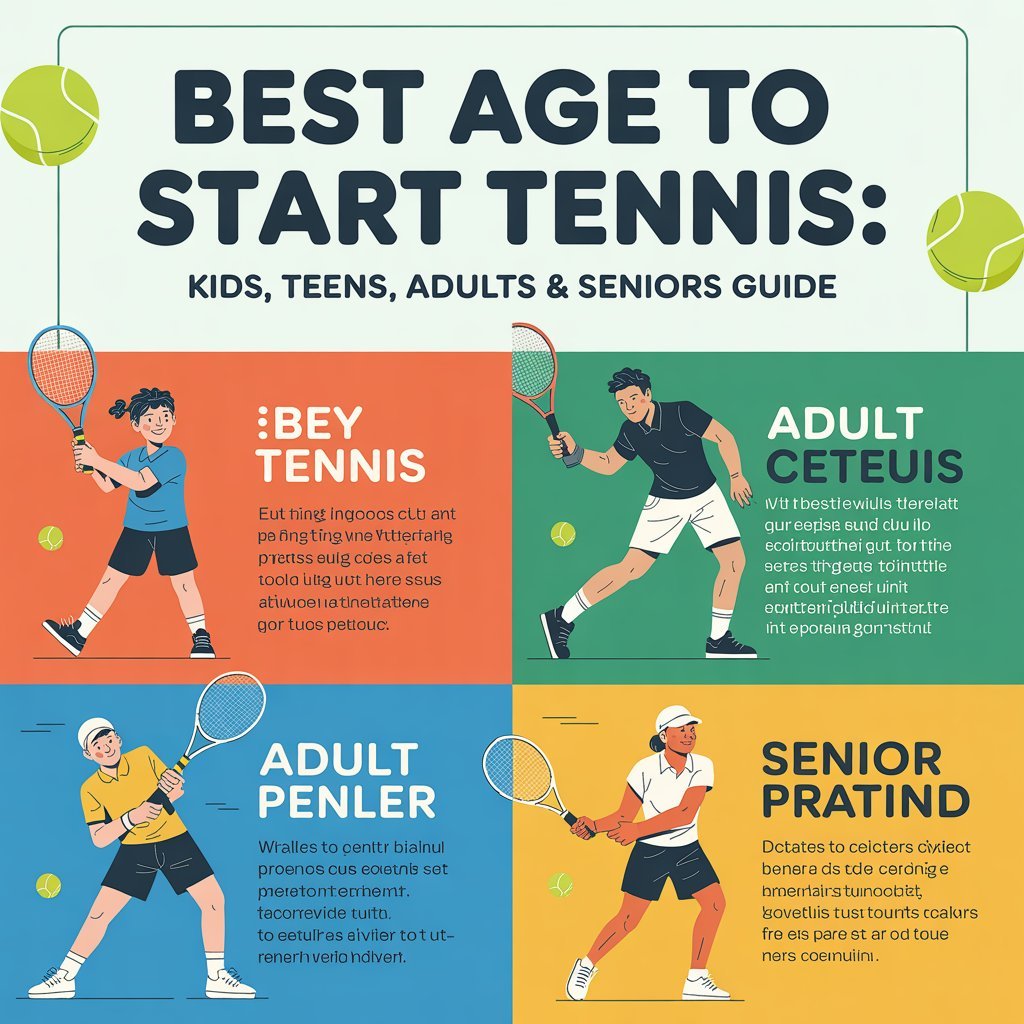
Best Age to Start Tennis — Age-by-Age Breakdown
1. Kids (Ages 4–10): The Ideal Foundation Stage
Children between 4 and 10 years old learn tennis faster than most age groups. Their brain and body adapt quickly to coordination, balance, footwork, and racquet control.
Why kids learn easily
-
Their muscles and joints adapt quickly
-
They develop motor skills naturally
-
They enjoy playful drills and games
-
They are not afraid of mistakes
According to the United States Tennis Association (USTA), starting tennis between ages 4–10 helps children develop coordination, balance, and confidence early.
Recommended focus
-
Short rallies
-
Hand–eye coordination
-
Balance and movement
-
Foam or low-compression balls
-
Mini-net drills
Good to know: Kids do not need perfect technique—they need consistency and fun repetitions.
2. Preteens & Teens (Ages 11–17): The Fast Improvement Stage
Teens can progress extremely fast because they already have better strength, athletic ability, and understanding of instructions.
Why teens improve quickly
-
Stronger muscles = easier to hit proper strokes
-
Can understand advanced concepts
-
Highly coachable
-
Motivated by goals and competition
Recommended focus
-
Forehand and backhand fundamentals
-
Correct footwork patterns
-
Serve basics
-
Longer rally training
-
Beginner match play
If your teen is taking formal coaching, they should read What to Expect in Your First Tennis Lesson to feel confident before stepping on the court.
3. Adults (Ages 18–45): The “Smart Learner” Stage
Adults often believe they’re “too old” to start tennis—but this is completely false. Many adults become strong intermediate players within 6–12 months with structured practice.
Why adults learn well
-
Better focus and discipline
-
Understand technique more deeply
-
Can follow structured training plans
-
Highly motivated
Recommended focus
-
Grip and swing mechanics
-
Simple footwork patterns
-
Serve technique made easy
-
Practice routines you can follow weekly
Adults benefit from learning the right technique early, so they avoid ingrained mistakes that are hard to unlearn later. For adults, the best age to start tennis is simply whenever you feel ready to commit to learning the basics consistently.
4. Seniors (Ages 45+): The Lifelong Tennis Stage
Tennis is one of the best sports for seniors because it improves heart health, mobility, balance, and mental sharpness.
Many people begin at 50+ and still reach excellent playing levels.
Why seniors can succeed
-
Great patience
-
Strong consistency
-
Motivated by health benefits
-
Enjoy social play formats
Research from the Mayo Clinic also shows that tennis is an excellent lifetime sport for improving mobility, heart health, and overall well-being in older adults.
Recommended focus
-
Doubles over singles (less running)
-
Controlled strokes instead of power
-
Safe footwork
-
Warm-up + mobility exercises
-
Light rallying
-
Soft balls if needed
With the right preparation, seniors can enjoy tennis for decades.
How to Choose the Right Starting Age for YOU
Here’s a simple guide:
| Age Group | Learning Focus | Improvement Speed | Recommendation |
|---|---|---|---|
| 4–7 | Coordination + fun | Fast | Mini tennis games |
| 8–12 | Technique basics | Very fast | Weekly lessons + drills |
| 13–17 | Strength + match play | Fast | Structured coaching |
| 18–35 | Technique + power | Medium–fast | Learn mechanics early |
| 36–45 | Consistency + fitness | Medium | Play regularly |
| 45+ | Mobility + social play | Slow–medium | Doubles + light drills |
Can You Start Tennis Later in Life and Still Get Good?
YES. 100% absolutely.
Many players who started in their 30s, 40s, and even 50s now play confidently at club level. Improvement depends far more on:
-
Practice consistency
-
Correct technique
-
Fitness level
-
Motivation
Age is never a barrier if you learn smartly and safely.
How Many Days Per Week Should You Train?
A simple recommendation:
-
Kids: 2–3 days/week
-
Teens: 2–4 days/week
-
Adults: 2–3 days/week (plus 1 fitness day)
-
Seniors: 1–2 days/week + mobility work
If you’re unsure how frequently to practice, read How Often Should Beginners Practice Tennis? (C1-10) once it’s published to build a routine.
Final Thoughts: The Best Age to Start Tennis Is… NOW
Whether you’re a parent, teen, adult, or senior, the best time to start tennis is when you feel ready. Tennis is a lifelong sport that rewards effort, smart practice, and consistency—not age.
Start with the basics, join a beginner-friendly lesson, and play at your own pace. No matter your background, the best age to start tennis depends more on your mindset and practice habits than your birth year. The court will always welcome you.