
If you want to learn how to hit a forehand in tennis, starting with the right technique is very important. Tennis beginners usually learn the forehand first because it is one of the most natural and effective shots in the game. Learning how to hit a forehand in tennis becomes much easier when you focus on balance, timing, and clean contact instead of power. A solid forehand helps you rally longer, control points better, and build confidence early in your tennis journey. If you are just starting out, learning the right technique from the beginning can save you from bad habits later.
In this guide, you will learn how to hit a forehand in tennis step by step, including grip, stance, swing path, contact point, and follow-through. By the end, you will know exactly what a beginner tennis forehand should look like and how to improve it with practice.
What Is a Forehand in Tennis?
A forehand is the shot you hit on your dominant side with the front of the racquet facing the ball. For a right-handed player, that usually means hitting on the right side of the body. For a left-handed player, it is usually on the left side.
The forehand is often the first shot beginners use to build consistency because it feels more natural than the backhand. Once you understand the basics, it becomes one of your main weapons during rallies.
Before working on your swing, it helps to learn the correct racquet hold. If you have not done that yet, start with this guide on how to hold a tennis racquet correctly.
Why the Forehand Matters for Beginners
A good forehand gives beginners several advantages:
- It helps you keep the ball in play more often
- It improves your confidence during rallies
- It becomes a foundation for learning topspin, control, and placement later
- It supports overall match improvement because you will use it constantly
Many beginners try to hit too hard too early. In reality, the best beginner forehand focuses on clean technique, balance, and timing first. Power comes later.
Step 1: Use the Right Forehand Grip
For most beginners, the best grip for the forehand is the eastern forehand grip or a slightly more modern semi-western grip.
Eastern Grip
This grip is simple and beginner-friendly. It makes it easier to hit flatter shots and learn clean contact.
Semi-Western Grip
This grip helps create more topspin, but it may feel less natural at first.
If you are unsure where to place your hand, imagine you are shaking hands with the racquet. That is a good starting point for many beginner players.
Step 2: Get into the Ready Position
Before the ball even comes to you, start in a proper ready position:
- Feet shoulder-width apart
- Knees slightly bent
- Racquet held in front of your body
- Eyes forward
- Stay light on your feet
The ready position gives you a better chance to move quickly and prepare early for the shot.
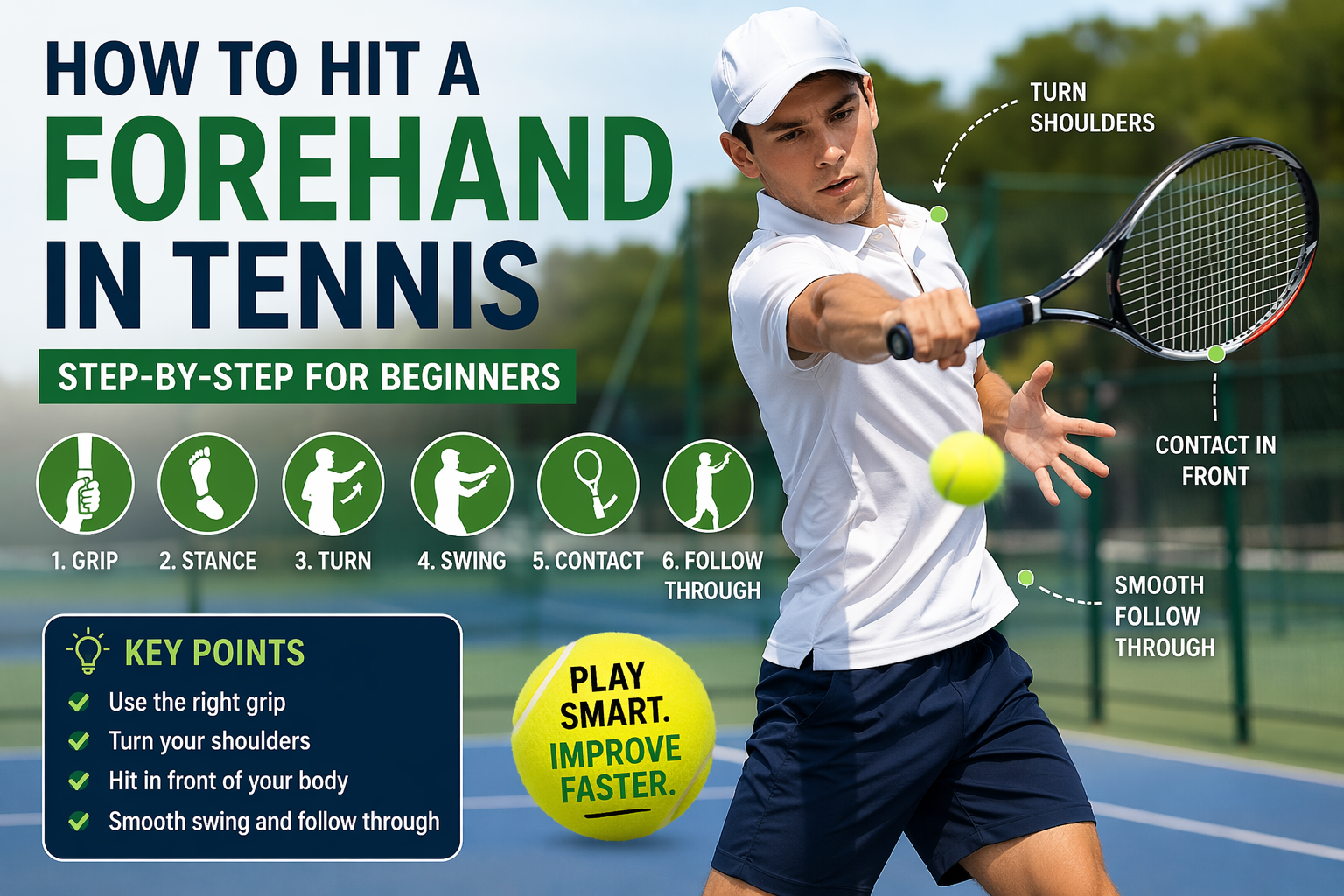
Step 3: Turn Your Shoulders Early
As soon as you see the ball coming to your forehand side, turn your shoulders and upper body. This is often called the unit turn.
During this step:
- Turn your shoulders sideways
- Take the racquet back
- Keep your non-dominant hand lightly helping with the racquet at first
- Stay balanced
A lot of beginners swing with only the arm. That is a mistake. The forehand should use the whole body, not just the hand and arm.
Step 4: Move Your Feet into Position
Footwork matters just as much as swing technique. Try to move so the ball is slightly in front of you when you hit it.
For beginners, a simple open stance or neutral stance works well depending on the situation. Your goal is not to be fancy. Your goal is to arrive balanced and on time.
Here are a few quick footwork basics:
- Take small adjustment steps as the ball approaches
- Do not stand flat-footed
- Keep your knees bent
- Try to stop drifting while swinging
Good forehands start from good positioning.
Step 5: Drop the Racquet and Start the Forward Swing
Once you are set up, let the racquet drop slightly below the ball before swinging forward. This helps you lift the ball and create a smoother, more controlled shot.
As you swing:
- Push from your legs
- Rotate your hips and shoulders forward
- Bring the racquet forward in a smooth motion
- Keep your head still
This upward and forward path is one reason tennis players can hit with both control and spin.
Step 6: Make Contact in Front of Your Body
This is one of the most important parts of the forehand. Many beginners improve faster when they learn how to hit a forehand in tennis with proper timing instead of trying to swing too hard. Try to make contact with the ball slightly in front of your front hip.
If the ball gets too close to your body, the shot becomes cramped. If it gets too far away, you lose control.
At contact:
- Keep your eyes on the ball
- Racquet face should be stable
- Arm should feel relaxed, not stiff
- Contact should feel clean and centered
A clean contact point matters more than hitting hard.
Step 7: Finish with a Smooth Follow-Through
After contact, continue your swing naturally across your body. A relaxed follow-through helps with control, rhythm, and injury prevention.
For beginners, the finish usually ends around shoulder height or slightly above. Do not force an exaggerated finish. Let it happen naturally.
A smooth follow-through shows that your swing stayed connected from start to finish.
Simple Forehand Checklist for Beginners
Use this checklist when practicing:
- Correct grip
- Ready position
- Early shoulder turn
- Good footwork
- Racquet drops below the ball
- Contact in front
- Smooth follow-through
If one part feels off, slow down and fix that single area before trying to hit faster.
Beginners can also review official tennis learning resources from the USTA.
Common Forehand Mistakes Beginners Make
Learning how to hit a forehand in tennis is easier when you know what to avoid.
1. Swinging Too Hard
Many beginners think power means better tennis. It does not. A controlled swing is far more useful.
2. Late Contact
If you hit the ball beside or behind your body, your forehand loses direction and power.
3. Poor Footwork
Even a good swing cannot save bad positioning.
4. Using Only the Arm
Your forehand should come from your legs, hips, shoulders, and arm working together.
5. Tight Grip
Holding the racquet too tightly makes your forehand stiff and harder to control.
If you want to avoid more beginner errors across your overall game, read 10 common mistakes beginners make in tennis and how to fix them.
Beginner Forehand Practice Tips
The best way to learn how to hit a forehand in tennis is to practice slowly and focus on clean contact. To improve faster, keep your forehand practice simple and repeatable.
Shadow Swings
Practice the motion without a ball. Focus on grip, turn, contact point, and finish.
Drop-Hit Drills
Drop the ball yourself and hit it after one bounce. This helps build timing.
Mini Tennis
Stand close to the net and rally softly. This builds touch and control.
Target Practice
Place cones or markers on the court and aim for them using smooth forehands.
Consistency First
Try to hit 10 clean forehands in a row before worrying about power.
For more practice ideas, continue with 15 best tennis drills for beginners.
How Long Does It Take to Build a Good Forehand?
Every beginner learns at a different pace. Some players feel comfortable within a few sessions, while others need a few weeks of regular practice. The most important thing is repeating correct technique often.
If you practice with purpose, even 15 to 20 minutes of focused forehand work several times a week can make a big difference.
Final Thoughts
Learning how to hit a forehand in tennis is one of the most important early steps for any beginner. A reliable forehand helps you rally, build confidence, and enjoy the game more. Focus on the basics first: proper grip, early preparation, good footwork, clean contact, and a smooth follow-through.
Do not rush power. A beginner forehand becomes strong only after it becomes consistent.
Now that you understand how to hit a forehand in tennis, the next step is to practice regularly and build consistency. Start simple, practice often, and trust the process. Once your forehand improves, many other parts of your game will improve with it.