

Indoor vs Outdoor Tennis:
If you’re new to tennis, one of the first questions you’ll face is where to play. Should you start on an indoor court or head outside? Both options are beginner-friendly, but each environment offers a different learning experience. Understanding the differences between indoor vs outdoor tennis will help you choose the best setting to build confidence, improve consistency, and enjoy the game from day one.
When comparing indoor vs outdoor tennis, beginners should focus on consistency, comfort, and how quickly they can build confidence on court. This guide breaks everything down simply, so you can decide what works best for your situation, schedule, and learning style.
Understanding the Difference Between Indoor and Outdoor Tennis
At a basic level, tennis is the same game wherever you play. The court dimensions, net height, and rules don’t change. What does change is the environment around you.
-
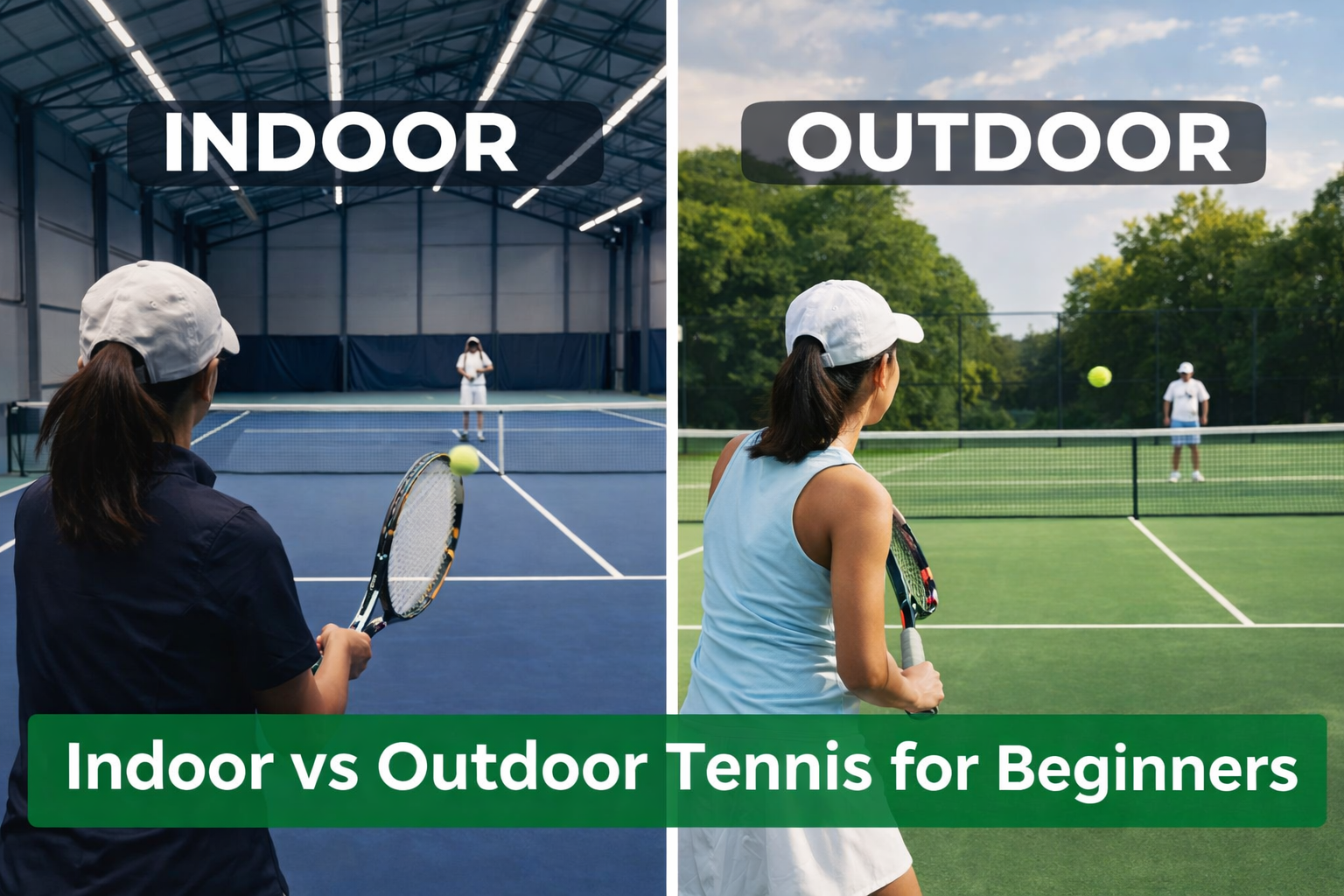
Indoor tennis is played inside climate-controlled facilities with artificial lighting.
-
Outdoor tennis is played on open courts exposed to weather, sunlight, and wind.
For beginners, these differences can affect how fast you improve and how comfortable you feel on court. According to guidelines from the International Tennis Federation (ITF), court dimensions and rules remain the same whether tennis is played indoors or outdoors.
Why Indoor Tennis Can Be Easier for Beginners
Indoor tennis is often considered more beginner-friendly, especially in the early learning phase.
1. No Weather Distractions
Indoor courts remove common challenges like wind, heat, cold, or rain. This allows beginners to focus on:
-
Hitting the ball cleanly
-
Learning proper footwork
-
Developing consistent strokes
Without weather affecting the ball, rallies feel more predictable and less frustrating.
2. Consistent Playing Conditions
Lighting, temperature, and court surface stay the same every time you play indoors. This consistency helps beginners:
-
Track the ball more easily
-
Build muscle memory faster
-
Improve timing and control
If you’re just learning how to swing and move correctly, consistency is a big advantage.
3. Better for Structured Lessons
Many beginner lessons and coaching programs are held indoors. The controlled environment makes it easier for coaches to teach fundamentals without interruptions. This can be especially helpful if you’re still learning the basics of the game, such as grip, stance, and swing paths.
Why Outdoor Tennis Is Great for Long-Term Growth
While indoor tennis feels easier at first, outdoor tennis offers benefits that beginners shouldn’t ignore.
1. Real-World Playing Experience
Most recreational and competitive tennis is played outdoors. Learning outside helps beginners:
-
Adapt to wind and sunlight
-
Judge ball depth and bounce naturally
-
Prepare for real match situations
These skills become important as you progress beyond the basics.
2. Variety of Court Surfaces
Outdoor courts often include hard, clay, or grass surfaces. Each surface affects ball bounce and movement differently. Exposure to different surfaces helps beginners:
-
Develop better footwork
-
Improve balance and anticipation
-
Understand how conditions affect strategy
This variety builds well-rounded skills over time.
3. Accessibility and Cost
Outdoor courts are usually more available and affordable than indoor facilities. Many public parks offer free or low-cost courts, making outdoor tennis a practical option for beginners who want to practice regularly.
Indoor vs Outdoor Tennis: Key Differences for Beginners
Here’s a simple comparison to help you decide:
Indoor Tennis
-
Predictable ball bounce
-
No wind or weather
-
Great for lessons and early learning
-
Often costs more
-
Limited availability in some areas
Outdoor Tennis
-
Natural conditions and challenges
-
Builds adaptability and confidence
-
Usually free or inexpensive
-
Weather can disrupt practice
-
Ball behavior changes with conditions
Which Is Better for Learning Tennis as a Beginner?
The indoor vs outdoor tennis debate isn’t about which is better overall, but which environment supports your current learning stage. There’s no single “right” answer. The best choice depends on your goals and circumstances.
Choose Indoor Tennis If You:
-
Are brand new to tennis
-
Want to focus on fundamentals without distractions
-
Are taking formal lessons
-
Prefer a controlled, predictable environment
Choose Outdoor Tennis If You:
-
Want to practice frequently at low cost
-
Enjoy playing in natural settings
-
Plan to play socially or in local matches
-
Are comfortable adjusting to conditions
Many beginners find the best approach is starting indoors and transitioning outdoors once they feel more confident.
How Indoor and Outdoor Tennis Fit Into Your Beginner Journey
If you’re just getting started, it helps to follow a clear learning path. Before worrying about court type, make sure you understand the basics—equipment, rules, and how the game works.
If you haven’t already, it’s a good idea to begin with a complete beginner guide like How to Start Playing Tennis (Beginner Guide 2026). That guide explains everything you need before stepping onto any court, whether indoor or outdoor.
Once you’re comfortable with basic strokes and movement, switching between indoor and outdoor courts will actually speed up your improvement.
Common Beginner Mistakes When Choosing a Court
Beginners often make these mistakes when deciding where to play:
-
Avoiding outdoor courts entirely due to fear of wind
-
Thinking indoor tennis is “too advanced.”
-
Switching environments too often early on
-
Ignoring court availability and cost
The key is consistency. Choose one environment to learn the basics, then slowly introduce the other.
Practical Recommendation for Beginners
For most beginners, the smartest approach looks like this:
-
Learn fundamentals indoors if possible
-
Practice regularly outdoors when the weather allows
-
Mix both environments once confidence improves
This combination builds solid technique while preparing you for real-world tennis.
Final Thoughts: Indoor or Outdoor Tennis—Which Should You Choose?
Indoor and outdoor tennis both offer valuable benefits for beginners. Indoor courts make learning easier at the start, while outdoor courts help you grow into a confident, adaptable player.
Instead of asking which one is “better,” ask which one fits your current stage of learning. As your skills improve, playing in both environments will make you a stronger, smarter tennis player overall.
If you’re serious about improving, start with the basics, stay consistent, and choose the court that keeps you motivated to play more often. Ultimately, choosing between indoor vs outdoor tennis comes down to access, budget, and how much structure you want as a beginner.